from the Journal of Agriculture, Food Systems, and Community Development |
|
|
|
JAFSCD is the world’s only community-supported journal. JAFSCD content is open access (free) thanks to the generous support of our shareholders: the JAFSCD Shareholder Consortium, Library Shareholders, a growing number of Individual Shareholders, and our JAFSCD Partners: |
|
|
Food systems around the world are riddled with inefficiencies and inequities that result in enormous quantities of wasted food and the perpetuation of food insecurity. Municipalities are increasingly positioned as the appropriate scale of intervention in food systems issues, and circular economies are becoming a prominent framing for such interventions. The present study investigates Our Food Future, an initiative led by a multistakeholder group of community change-makers that aimed to develop a regional circular food system in Guelph-Wellington, Ontario, Canada.
In a new JAFSCD article, Our Food Future: A regional food circularity case study from Canada, authors Haley Everitt and Kate Parizeau argue that the proponents of Our Food Future worked to leverage circular economy and municipal innovation discourses and practices to catalyze a sustainability transformation based in the local food system.
Corresponding author Kate Parizeau can be contacted at kate.parizeau@uoguelph.ca. PROJECT ACCOMPLISHMENTS Between 2020 and 2023, it was estimated that Our Food Future's outcomes included:
- creation of 287 circular jobs;
- funding for 93 community food projects;
- increased access to affordable nutritious foods for 20,572 individuals;
- diversion, upcycling, or recycling of 84,860 tonnes of food waste;
- 320 acres of land piloting regenerative agricultural practices; and
- prevention of 168,788 tonnes of greenhouse gas emissions.
RECOMMENDATIONS FOR POLICY, PRACTICE, AND RESEARCH - Multiple interviewees alluded to the ambitious scale and complexity of Our Food Future as a source of operational challenges, while some also named this ambition as a factor that contributed to the diverse successes associated with the project.
-
Project responsibilities and resources were not always evenly distributed between the city and the county, and the application of circularity appeared to prioritize urban rather than rural spaces.
-
Contrast was drawn between some proponents’ entrepreneurial ‘move fast and break things’ worldview versus nonprofit organizations’ approach of slow, relational advocacy to effect structural change.
SHARE ON YOUR SOCIALS
Circularity in Canada: #OurFoodFuture fostered the development of new and expanded interventions seeking to disrupt traditional food system dynamics. The project focused on #triplebottomline goals with multistakeholder collaborations to de-silo sectors. Learn more about food circularity and read the entire case study for free @JAFSCD: https://doi.org/10.5304/jafscd.2026.152.024
|
|
|
|
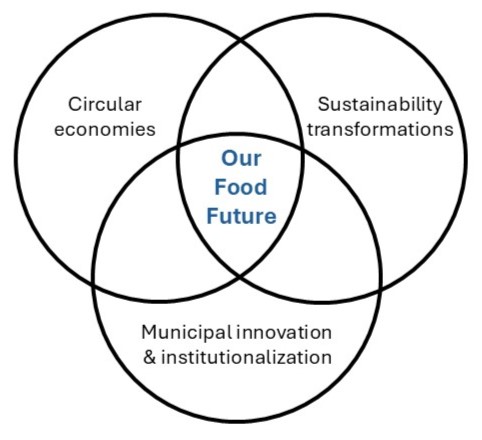
Conceptual image above of Our Food Future; provided by the authors. |
|
|
|
|
INFAS Food Systems Fellowship Application for 2026–2027
The INFAS Food Systems Fellowship (FSF) Program for 2026–2027 welcomes applications from graduate students who aim to engage with communities in their food systems–related field of study. This fellowship program provides professional development and mentoring, generally, and toward engaging with communities in ethical and respectful ways in students’ present or future research and work, specifically. Applications must be received by June 1, 2026. |
|
|
|
EVENT FROM A KINDRED ORGANIZATION |
|
|
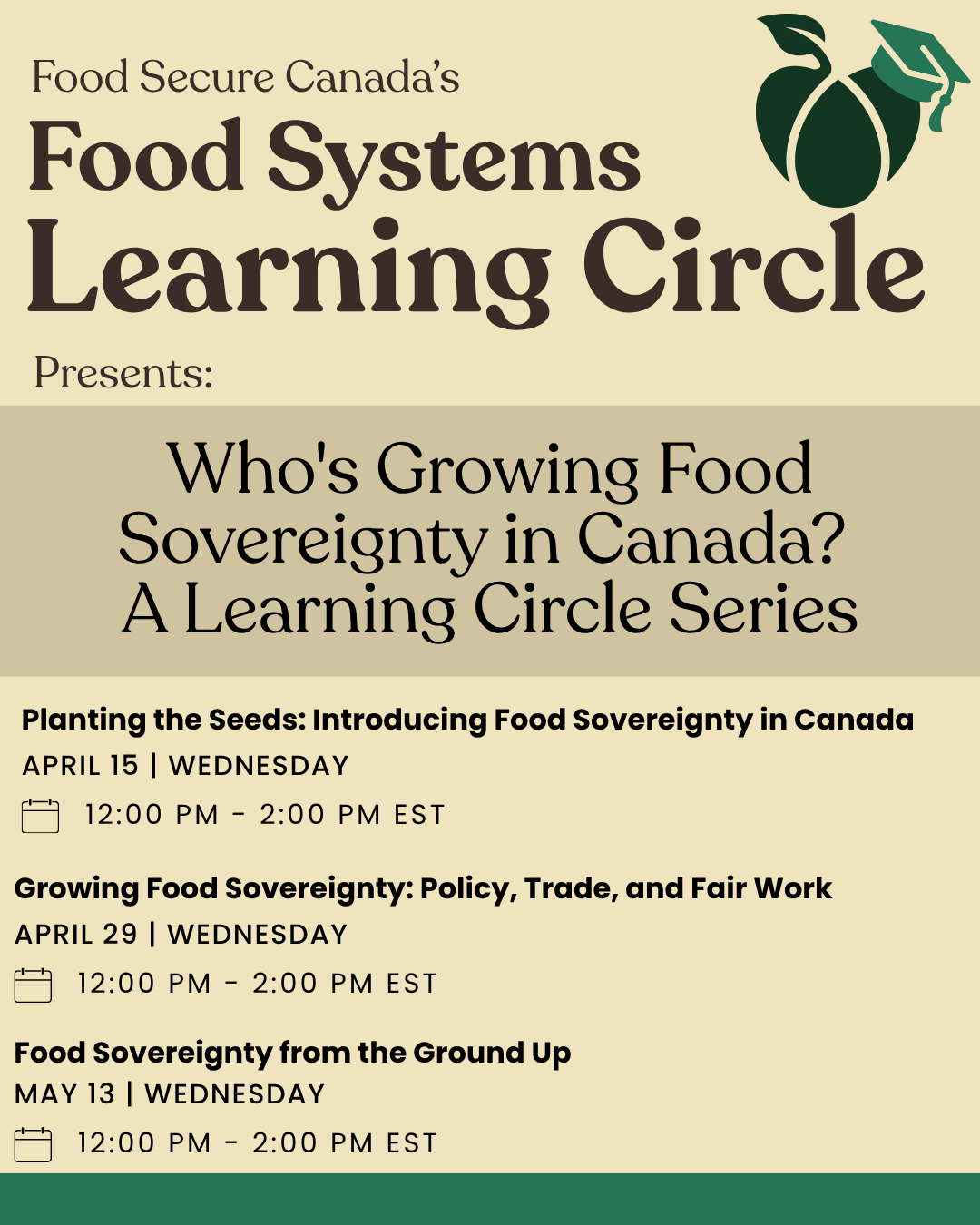
Who's Growing Food Sovereignty in Canada?
Join Food Secure Canada for a new workshop series
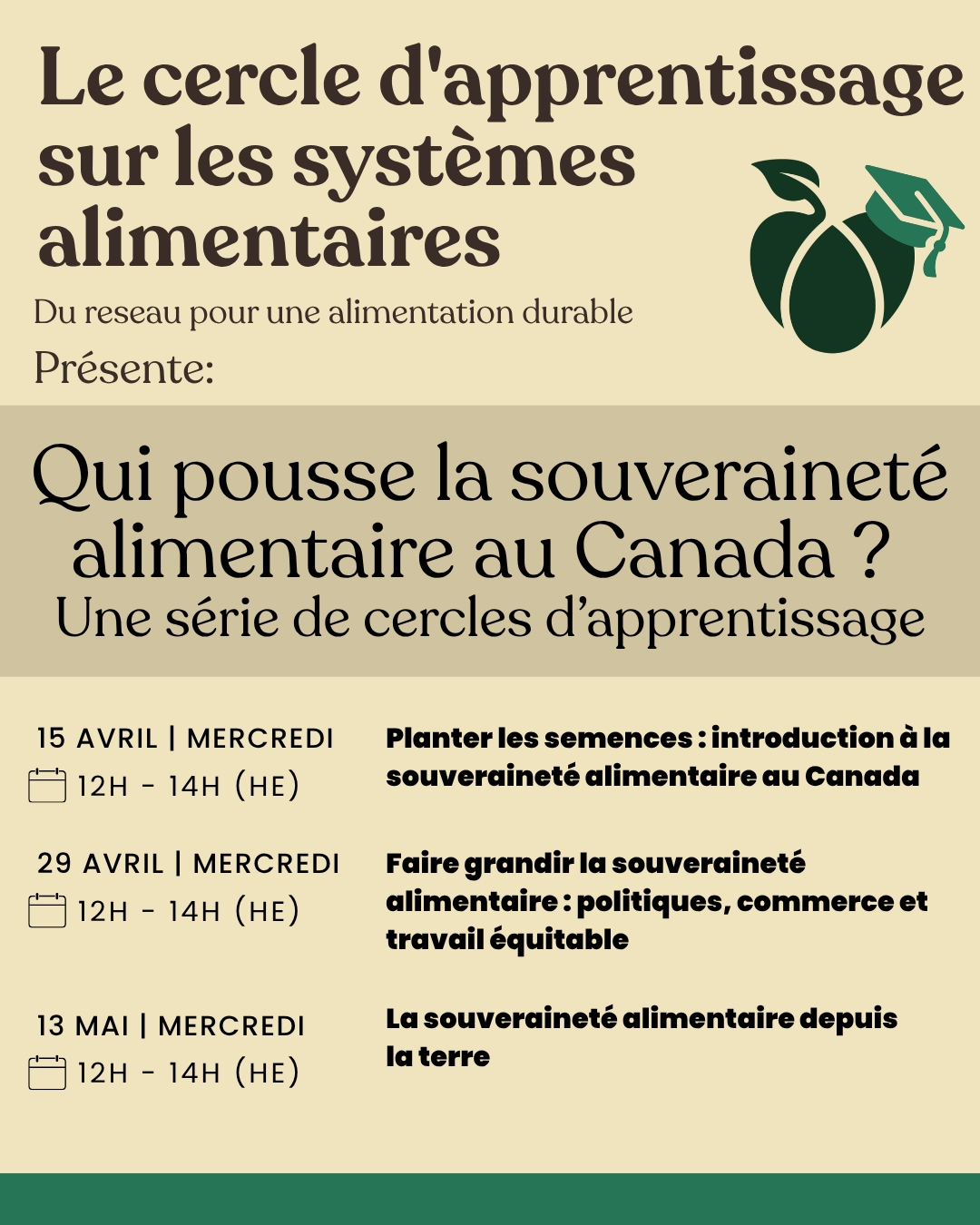
Food Secure Canada is launching the Food Systems Learning Circle with a three-part online workshop series: Who's Growing Food Sovereignty in Canada? |
|
|
|
-
Workshop 3 — Food Sovereignty from the Ground Up Wednesday, May 13 | 12:00–2:00 PM ET
Speakers include Raj Patel (U of Texas, Austin), Celeste Smith (National Farmers Union), Chris Ramsaroop (Justicia for Migrant Workers), Toyin Kayo-Ajayi (Canadian Black Farmers Association), Tabitha Robin (UBC), Joseph LeBlanc (NOSM University), Geneviève Lalumière (Union Paysanne), and Cathy Holtslander (National Farmers Union).
Sessions are held online in English with French interpretation. Recordings will be available to all registered participants. Pricing: - Single session: $60 standard | $30 student/unwaged | $15 solidarity
- Full series: $150 standard | $70 student/unwaged | $40 solidarity
No one will be turned away for lack of funds. If cost is a barrier, please reach out before registering.
Register here |
|
|
|
This email is sent to you as a notification of the newest JAFSCD articles and other occasional JAFSCD news. |
|
|
JAFSCD is an open access, community-supported journal! Your library, program, or organization can become a shareholder to help keep JAFSCD's content available to all, regardless of their resources. We welcome anyone to become an individual shareholder; donations are tax-deductible to the extent allowed by law.
|
|
|
|
|