from the Journal of Agriculture, Food Systems, and Community Development |
|
|
|
JAFSCD is the world’s only community-supported journal. JAFSCD content is open access (free) thanks to the generous support of our shareholders: the JAFSCD Shareholder Consortium, Library Shareholders, a growing number of Individual Shareholders, and our JAFSCD Partners: |
|
|
JAFSCD peer-reviewed article by Segnide J. Guidimadjegbe (Oregon State U) and Laurence C. Becker (Oregon State U) Agricultural policies that promote chemical-intensive agriculture in Africa south of the Sahara threaten the distinctive qualities of local food. When smallholders lose their food identities while pursuing the export-oriented crops that rely on purchased inputs, national food security is put in jeopardy. Protecting local food labels can be a rational, reliable path to food sovereignty for communities.
In a new JAFSCD article, From geographical indication protection to food sovereignty: Cassava and Gari Sohoui in Savalou, Benin, authors Segnide J. Guidimadjegbe and Laurence C. Becker present initial findings from an ethnographic case study that examines the cassava cropping system in the Savalou terroir and the possible implications of the geographical indication (GI) labeling of Gari Sohoui (processed cassava) on local communities’ food sovereignty.
Corresponding author Segnide J. Guidimadjegbe can be contacted at chancesegnide@gmail.com KEY FINDINGS - In the absence of practical agroecological alternatives to manage weeds, farmers use herbicides that are widely accessible because of the country’s agricultural development strategy.
-
While GI protection of Gari Sohoui in central Benin promises to foster social cohesion, generate substantial economic gains, and promote transition to agroecological practices, the widespread use of herbicides threatens to undermine the status of Gari Sohoui.
- GI protection for Gari Sohoui empowers the local community, especially women, to take control of their food system through recognizing and validating local knowledge.
RECOMMENDATIONS FOR POLICY, PRACTICE, AND RESEARCH - Local cassava growers and processors may need to strategize to progressively eliminate herbicide use from the cassava cropping system to maintain the reputation of their Gari Sohoui.
-
The central government should incorporate food sovereignty ideology into the national agricultural development strategy and expand policies that value and promote farming based on agroecological principles.
- National and international agricultural development funding should target farmers and private enterprises working to promote the use of effective and environmentally friendly inputs in cropping systems.
-
The national legal system needs to provide laws tailored to guarantee protection of geographical indication (GI) products and to facilitate their insertion into regional and global markets.
SHARE ON YOUR SOCIALS
Protecting local food offers a path to food sovereignty for rural communities in Benin Africa. This case study examines Gari Sohoui, a processed form of cassava originating from Savalou District (or Commune) in central Benin and examines to what extent geographical indication (GI) labeling could protect this distinctive local food. Read the full @JAFSCD article for free: https://doi.org/10.5304/jafscd.2026.152.038
#gari #benin #cassava #geographicalindication |
|
|
|
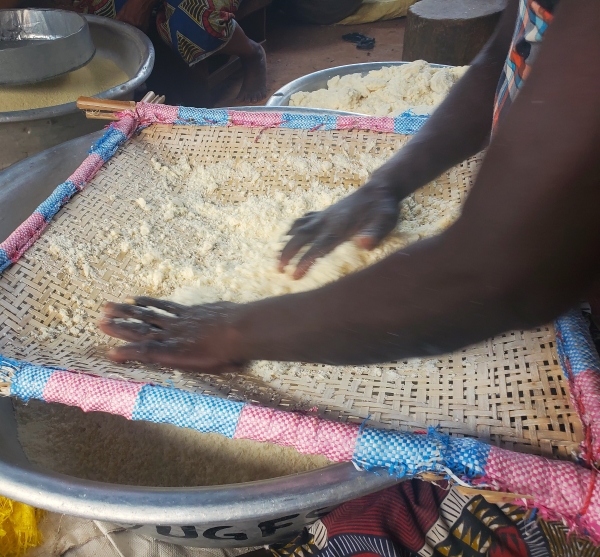
Photo above: Fermented, ground cassava is sifted before the roasting stage of Gari Sohoui; photo
provided. |
|
|
|
|
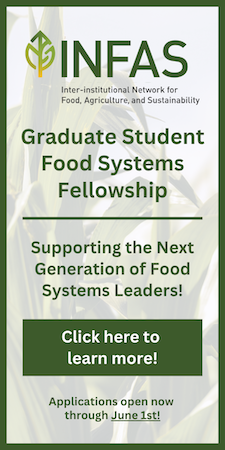
INFAS Food Systems Fellowship Application for 2026–2027
The INFAS Food Systems Fellowship (FSF) Program for 2026–2027 welcomes applications from graduate students who aim to engage with communities in their food systems–related field of study. This fellowship program provides professional development and mentoring, generally, and toward engaging with communities in ethical and respectful ways in students’ present or future research and work, specifically. Applications must be received by June 1, 2026. |
|
|
|
EVENT FROM A KINDRED ORGANIZATION |
|
|
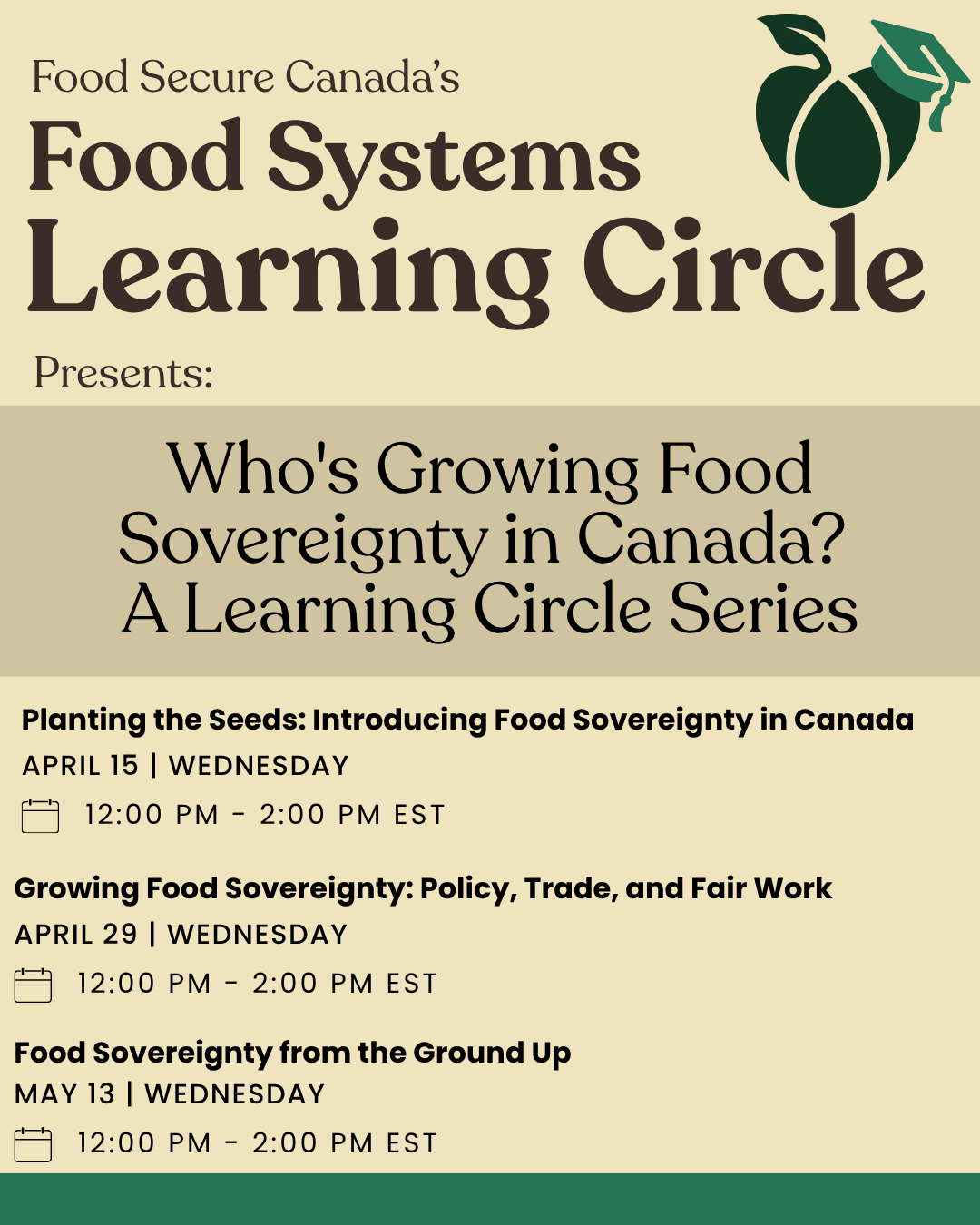
Who's Growing Food Sovereignty in Canada?
Join Food Secure Canada for a new workshop series
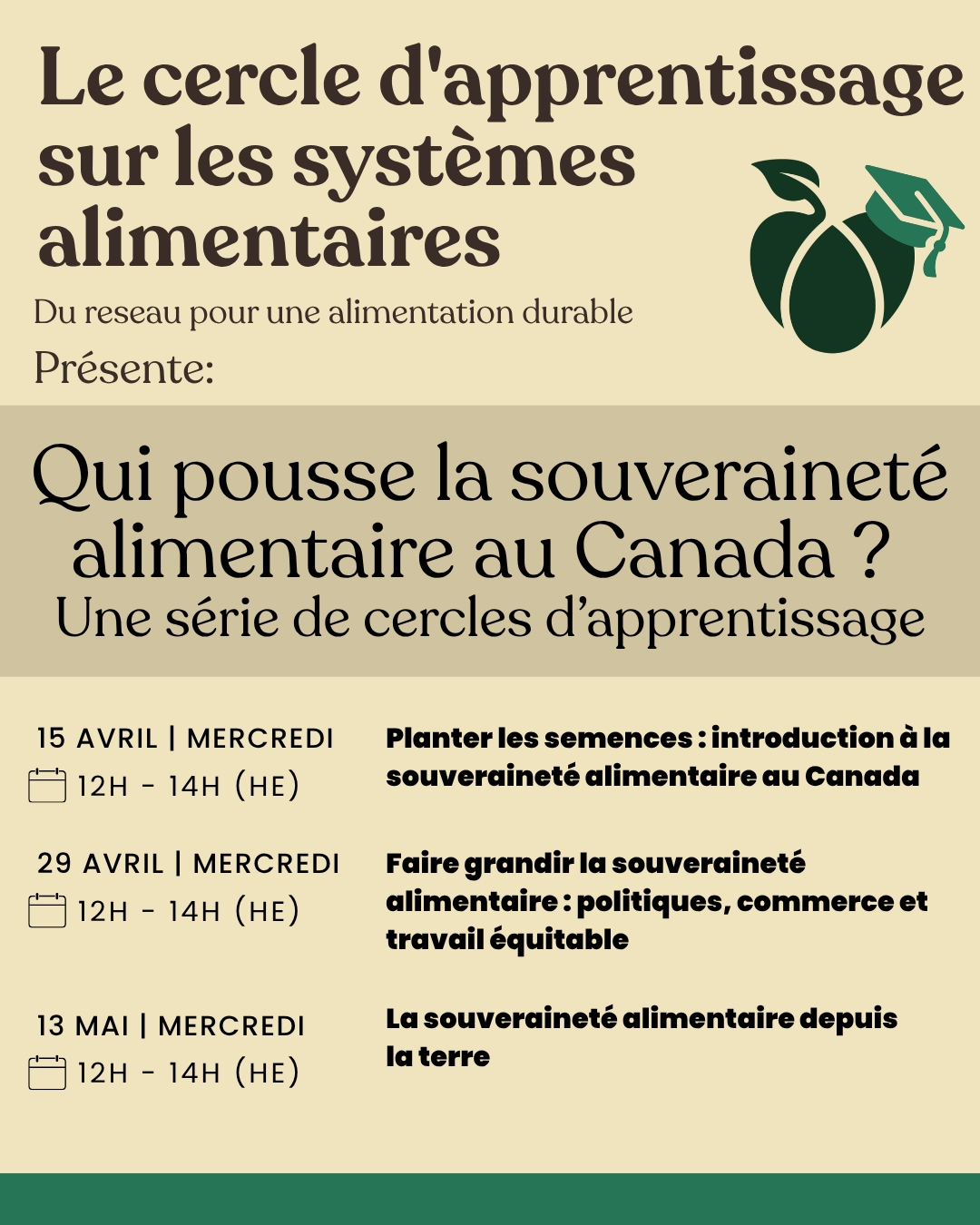
Food Secure Canada is launching the Food Systems Learning Circle with a three-part online workshop series: Who's Growing Food Sovereignty in Canada? |
|
|
|
-
Workshop 3 — Food Sovereignty from the Ground Up Wednesday, May 13 | 12:00–2:00 PM ET
Speakers include Raj Patel (U of Texas, Austin), Celeste Smith (National Farmers Union), Chris Ramsaroop (Justicia for Migrant Workers), Toyin Kayo-Ajayi (Canadian Black Farmers Association), Tabitha Robin (UBC), Joseph LeBlanc (NOSM University), Geneviève Lalumière (Union Paysanne), and Cathy Holtslander (National Farmers Union).
Sessions are held online in English with French interpretation. Recordings will be available to all registered participants. Pricing: - Single session: $60 standard | $30 student/unwaged | $15 solidarity
- Full series: $150 standard | $70 student/unwaged | $40 solidarity
No one will be turned away for lack of funds. If cost is a barrier, please reach out before registering.
Register here |
|
|
|
This email is sent to you as a notification of the newest JAFSCD articles and other occasional JAFSCD news. |
|
|
JAFSCD is an open access, community-supported journal! Your library, program, or organization can become a shareholder to help keep JAFSCD's content available to all, regardless of their resources. We welcome anyone to become an individual shareholder; donations are tax-deductible to the extent allowed by law.
|
|
|
|
|