##PREHEADER##

JAFSCD logo

May 1, 2026

from the Journal of Agriculture, Food Systems, and Community Development


JAFSCD is the world’s only community-supported journal. JAFSCD content is open access (free) thanks to the generous support of our shareholders: the JAFSCD Shareholder Consortium, Library Shareholders, a growing number of Individual Shareholders, and our JAFSCD Partners:

Inter-institutional network for food, agriculture, and sustainability
University of Vermont
John Hopkins Center for a Livable Future
Center for Environmental Food Systems
University of North Carolina Center for Health Promotion and Disease Prevention
 
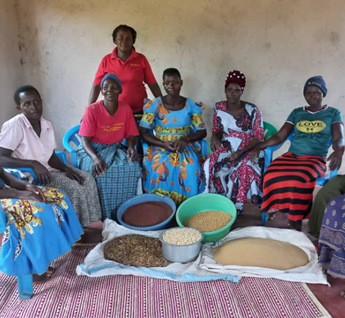
Dibulatyame FNSSG members of Bwiiza Parish in Namasagali Sub County, Kamuli District, sorting ingredients for making nutrient-dense flour. Photo taken in August 2024 by Mbeiza Moureen

Food, farming, and finances: An integrative program working to end rural hunger in Uganda


JAFSCD commentary by Moureen Mbeiza, Caroline Nambafu, David Banige (all at the Iowa State U–Uganda Program), Samuel Ikendi (U of California, Merced), Dorothy Masinde, Lee Burras (both at Iowa State U), Gideon Nadiope (Iowa State U–Uganda Program), and Francis Owusu (Iowa State U)


Press release written by Lila Davis (JAFSCD copyeditor and student at Cornell U)


In a new JAFSCD commentary, Food and nutrition security support groups: A safety net strategy for sustaining gains from a livelihood program in Uganda, authors Moureen Mbeiza, Caroline Nambafu, David Banige, Samuel Ikendi, Dorothy Masinde, Lee Burras, Gideon Nadiope, and Francis Owusu present the work of the Iowa State University (ISU) Center for Sustainable Livelihoods (CSRL) in Uganda related to food and nutrition security support groups (FNSSGs). 


A 2024 national census by the Uganda Bureau of Statistics found that 46% of Ugandans experience food insecurity. The CSRL program was developed to supplement the work of the local government in ending rural hunger in Uganda, as a public-private partnership between the CSRL, the ISU Uganda Program (ISU-UP), and Makerere University located in Kampala, Uganda. The program works to implement changes to eradicate rural hunger through sustainable means, such as education, improved livestock production, enhanced group member income, distribution of seeds, and post-harvest management. 


The commentary outlines key activities of the FNSSGs, including technical support for participants, particularly people at risk for malnutrition who have recently graduated from nutrition education centers (NECs). The FNSSGs do this by providing support for: 

sanitation and hygiene measures, increasing crop production, enhancing participant income through table banking, and providing nutrition and health counseling. 


The authors identify major achievements of the program as well, such as the organization’s growth (from 300 at its inception in 2019 to over 1,000 members by 2024), increased training capacity, improved seed quality, and encouraged reinvestment of profits into member farms. 


This program fills an important gap for people who recently transitioned out of NECS, supporting them in building sustainable livelihoods to provide food and financial security. It also plays an important role in working toward the United Nations Sustainable Development Goals, particularly in addressing hunger and malnutrition. 


Corresponding author Samuel Ikendi can be contacted at sikendi@ucanr.edu.


SHARE ON YOUR SOCIALS

Curious about how people across the world from one another work together to promote food security? Or maybe a group promoting economic resilience AND food availability with the goal of ending rural hunger? Check out a recent JAFSCD commentary about a partnership that has developed and implemented food and nutrition security support groups (FNSSGs), a program that supports households at risk of malnutrition. Read the @JAFSCD commentary for free: https://doi.org/10.5304/jafscd.2026.152.029

#foodsecurity #malnutrition #Uganda #NutritionEducationCenters @IowaStateUniversity

Photo above: Dibulatyame FNSSG members of Bwiiza Parish in Namasagali Sub County, Kamuli District, sorting ingredients for making nutrient-dense flour. Learn more about the process in a previous JAFSCD article: https://doi.org/10.5304/jafscd.2023.131.010. Photo taken in August 2024 by Mbeiza Moureen.


NEWS FROM JAFSCD

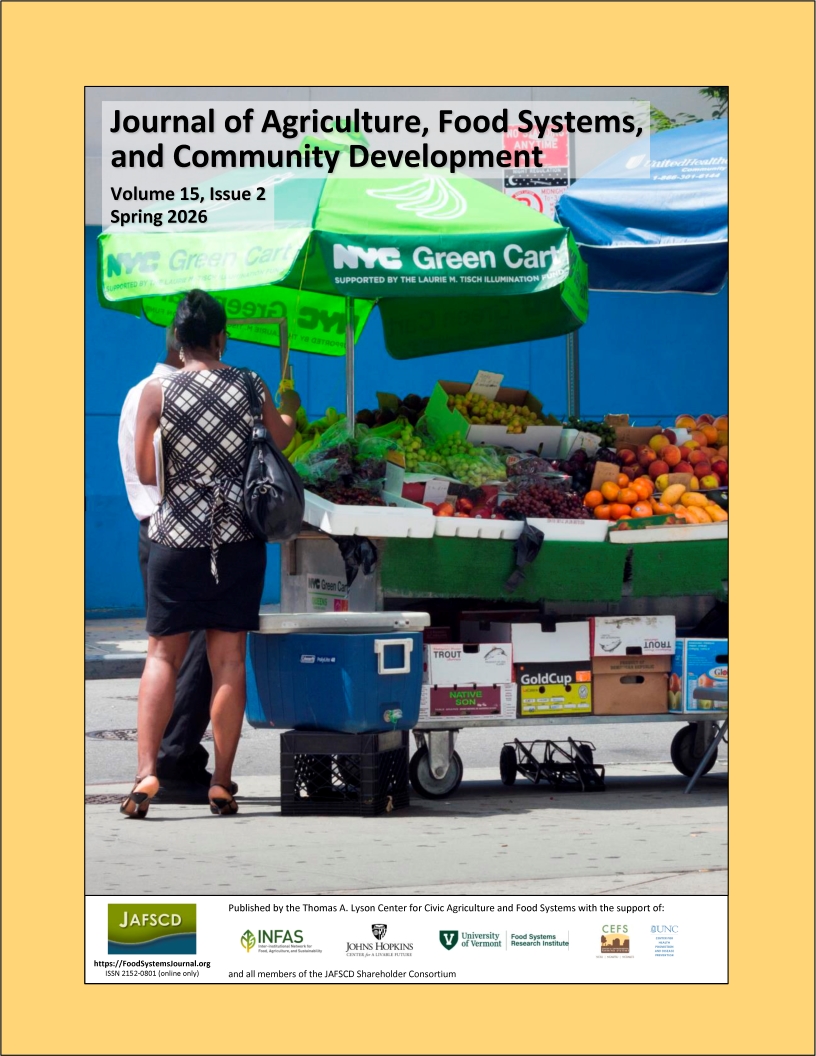
Cover of the spring 2026 issue of JAFSCD is a photo of a NYC Green Cart with a customer and the vendor.

Cover photo credit: © Littleny, ID 26656408 | Dreamstime.com

The spring 2026 issue shares 20 open call papers on a wide range of food systems topics, many aimed at righting systemic food and farming inequalities — to quote the editorial from editor-in-chief Duncan Hilchey. They’re joined by 2 columns, a viewpoint, a commentary, and 15 book reviews!


On our cover, a NYC Green Cart on a street in Jamaica, Queens, New York, is one of many that sell fresh fruits and vegetables to promote healthy eating in neighborhoods that lack access. See the article Sustaining mobile produce vending in NYC: Evaluating the future of Green Carts, for an analysis of the successes and challenges of the NYC Green Carts program. 

You can read or download any of the articles or the entire issue for free, as always. 


EVENT FROM A KINDRED ORGANIZATION

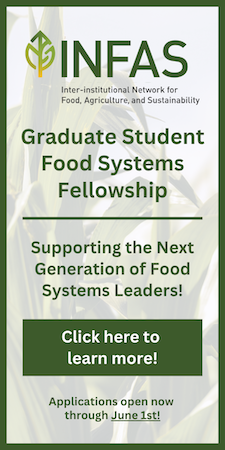
INFAS Graduate Student Food Systems Fellowship flier.

INFAS Food Systems Fellowship Application for 2026–2027


The INFAS Food Systems Fellowship (FSF) Program for 2026–2027 welcomes applications from graduate students who aim to engage with communities in their food systems–related field of study. This fellowship program provides professional development and mentoring, generally, and toward engaging with communities in ethical and respectful ways in students’ present or future research and work, specifically.


Applications must be received by June 1, 2026.

Apply Today
 

Who's Growing Food Sovereignty in Canada?
Join Food Secure Canada for a new workshop series


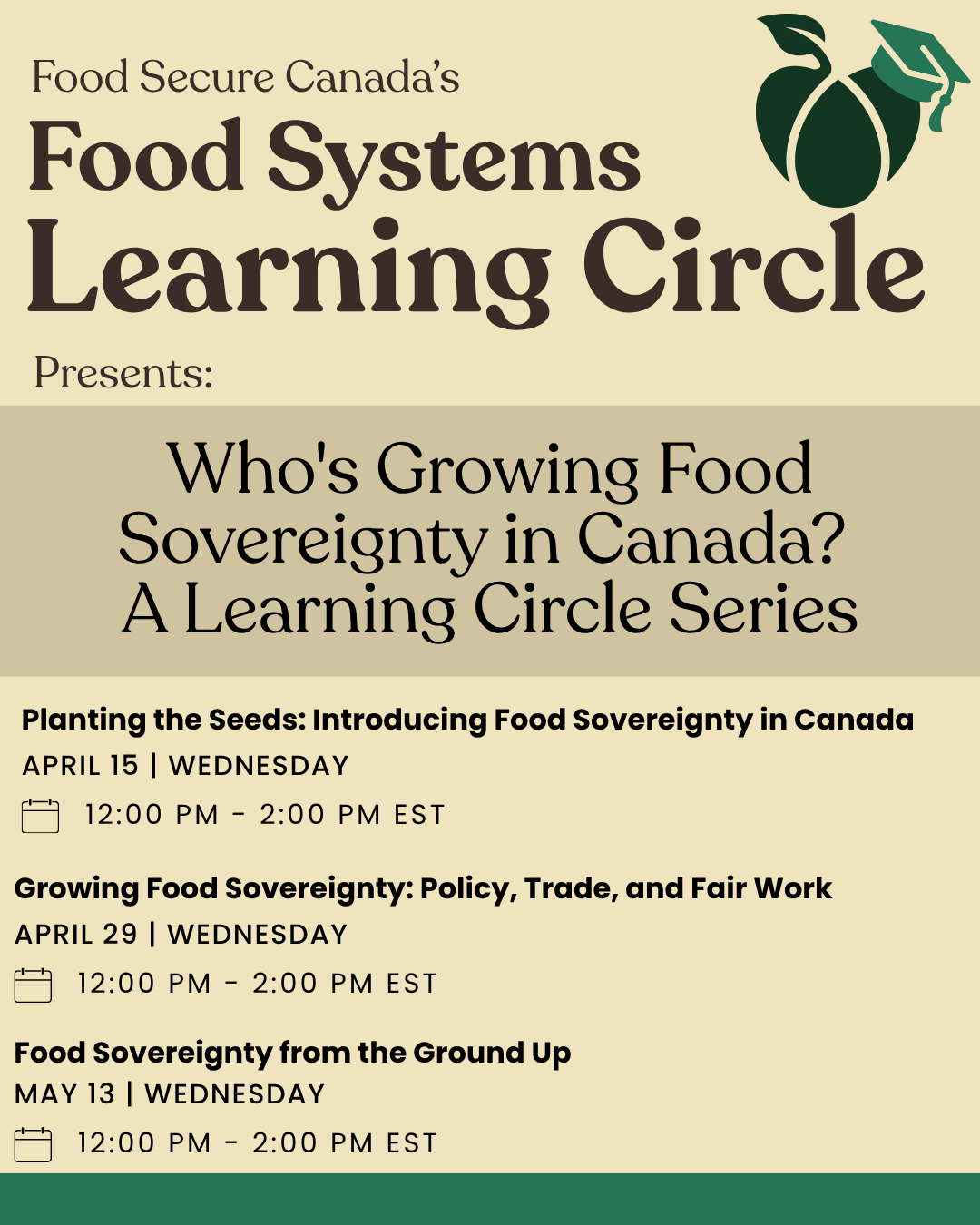
Food Secure Canada is launching the Food Systems Learning Circle with a three-part online workshop series: Who's Growing Food Sovereignty in Canada?

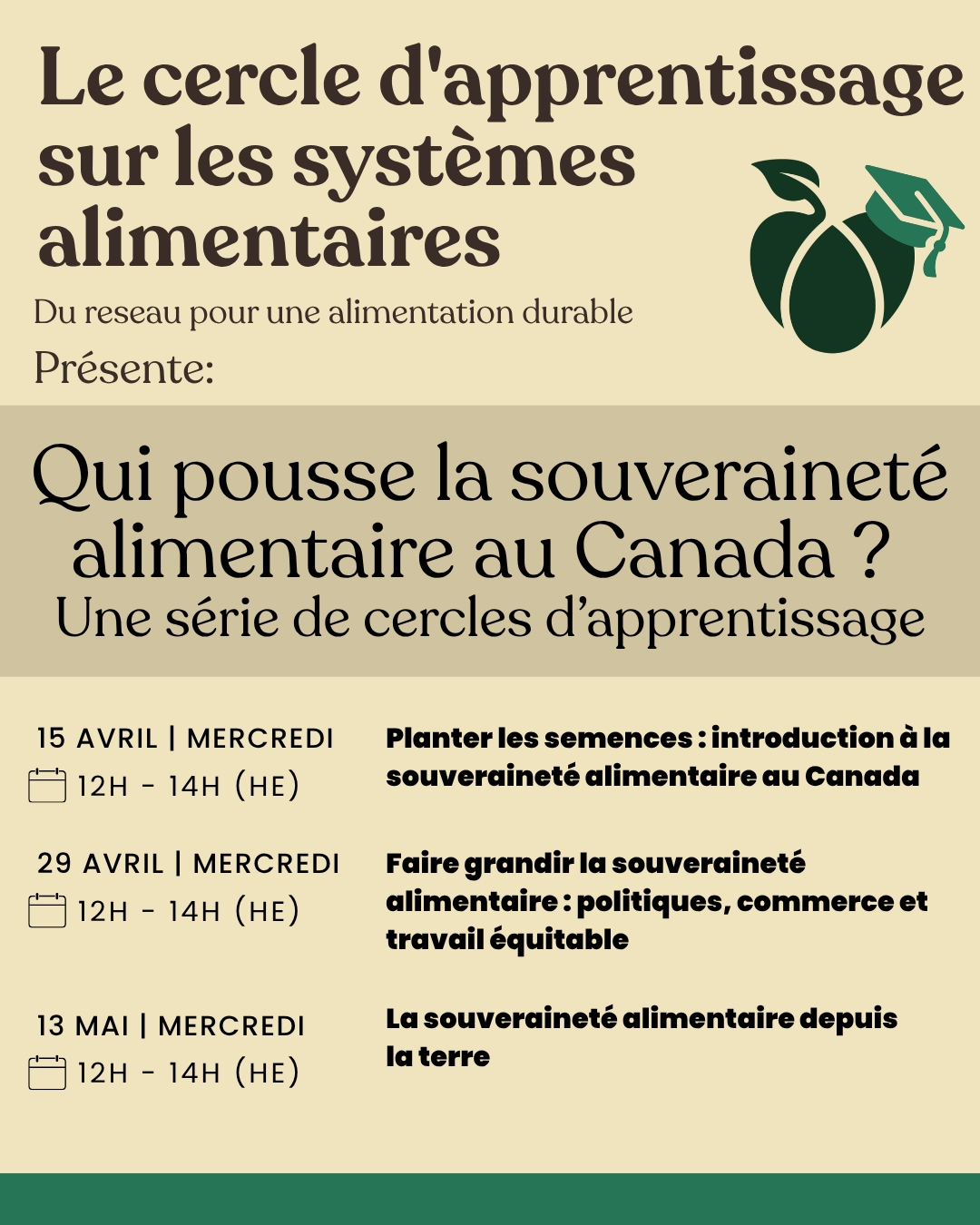
In francias: Food Systems Learning Circle flyer: Who's  growing food sovereignty in Canada? A learning circle series
Food Systems Learning Circle flyer: Who's  growing food sovereignty in Canada? A learning circle series
  • Workshop 3 — Food Sovereignty from the Ground Up Wednesday, May 13 | 12:00–2:00 PM ET

Speakers include Raj Patel (U of Texas, Austin), Celeste Smith (National Farmers Union), Chris Ramsaroop (Justicia for Migrant Workers), Toyin Kayo-Ajayi (Canadian Black Farmers Association), Tabitha Robin (UBC), Joseph LeBlanc (NOSM University), Geneviève Lalumière (Union Paysanne), and Cathy Holtslander (National Farmers Union).


Sessions are held online in English with French interpretation. Recordings will be available to all registered participants.


Pricing: 

  • Single session: $60 standard | $30 student/unwaged | $15 solidarity
  • Full series: $150 standard | $70 student/unwaged | $40 solidarity

No one will be turned away for lack of funds. If cost is a barrier, please reach out before registering.


Register here


This email is sent to you as a notification of the newest JAFSCD articles and other occasional JAFSCD news.

Were you forwarded this JAFSCD News Flash and you'd like to join the mailing list? Sign up here!

JAFSCD is an open access, community-supported journal! Your library, program, or organization can become a shareholder to help keep JAFSCD's content available to all, regardless of their resources. We welcome anyone to become an individual shareholder; donations are tax-deductible to the extent allowed by law.

Center for Transformative Action

JAFSCD is published by the Thomas A. Lyson Center for Civic Agriculture and Food Systems, a project of the Center for Transformative Action (an affiliate of Cornell University). CTA is a 501(c)(3) organization that accepts donations on JAFSCD's behalf.


Click here to unsubscribe. | Click here to forward
View this email as a web page
Message sent by JAFSCD, info@jafscdcommunity.org
JAFSCD Community | Center for Transformative Action | P.O. Box 760 | Ithaca, NY 14851