from the Journal of Agriculture, Food Systems, and Community Development |
|
|
|
JAFSCD is the world’s only community-supported journal. JAFSCD content is open access (free) thanks to the generous support of our shareholders: the JAFSCD Shareholder Consortium, Library Shareholders, a growing number of Individual Shareholders, and our JAFSCD Partners: |
|
|
JAFSCD peer-reviewed article by Elisangela Sodré, Alexandre de Azevedo Olival, and Marla Weihs (all at U do Estado de Mato Grosso ), David Rojas (Bucknell U), and Carolyn Petersen (U of Exeter)
This study analyzes how family farmers adopt silvopastoral systems that integrate trees, pastures, and livestock with the support of participatory learning processes. Conventional cattle ranching remains one of the main sources of income for many family farmers in the Brazilian Amazon, but it is also one of the main drivers of deforestation, soil degradation, and climate vulnerability. Despite growing ecological and economic challenges, monoculture-based agricultural systems still predominate in rural development models and in cultural perceptions of what constitutes “productive” land.
In a new JAFSCD article, Beyond the shade: Family farmers' perceptions of the implementation of silvopastoral systems in the Amazon, the authors present the results of a qualitative case study based on in-depth interviews with 17 farmers living in areas of intense agricultural expansion. The study investigates how these farmers perceive the adoption of silvopastoral practices that integrate trees, pastures, and livestock in the same area.
The research highlights how historical patterns of occupation, processes of socioeconomic exclusion, and culturally dominant views of ‘clean' or 'tidy’ pastures limit innovation. At the same time, community networks and initiatives supported by nongovernmental organizations, based on participatory approaches inspired by Paulo Freire, have created opportunities for dialogic learning and the co-production of ecological learning. Farmers involved in silvopastoral initiatives have come to recognize and value biodiversity not only as an environmental asset, but also as a central element for productive and resilient livestock systems.
Corresponding author Alexandre de Azevedo Olival can be contacted at aolival@unemat.br
KEY FINDINGS
Monoculture-based farming systems remain culturally dominant, despite the recognition of their ecological and economic lack of viability.
Experiences with soil and pasture degradation have led family farmers to question the viability of conventional livestock farming; through community networks and practical learning, they have begun to build interest and confidence in silvopastoral systems as a productive and ecological alternative.
Community networks and initiatives supported by NGOs and based on participatory pedagogy, promote trust building, knowledge exchange, and collective experimentation. Silvopastoral systems promote new understandings of biodiversity as an ecological and economic resource.
The adoption of these systems is limited by labor demands, the need for technical knowledge, initial conditions with severely degraded pastures, and infrastructure limitations.
RECOMMENDATIONS FOR POLICY, PRACTICE, AND RESEARCH - Rural development policies should recognize sociocultural barriers—not just technical ones—that influence agricultural innovation.
-
Support for silvopastoral systems should prioritize participatory, community-based, and long-term approaches rather than standardized technical packages.
- Technical assistance services and civil society organizations should act as facilitators of farmer-led experimentation and knowledge exchange.
-
Greater investment is needed to reduce labor and infrastructure constraints faced by family farmers.
- Future research should deepen our understanding of how locally generated ecological knowledge contributes to sustainable food systems and climate resilience.
SHARE ON YOUR SOCIALS
Beyond the shade: When the forest ceases to be an obstacle and becomes an ally of livestock farming. A new study published in JAFSCD analyzes how family farmers adopt silvopastoral systems that integrate trees, pastures, and livestock with the support of participatory learning processes. Read the full @JAFSCD article for free: https://doi.org/10.5304/jafscd.2026.152.037
|
|
|
|
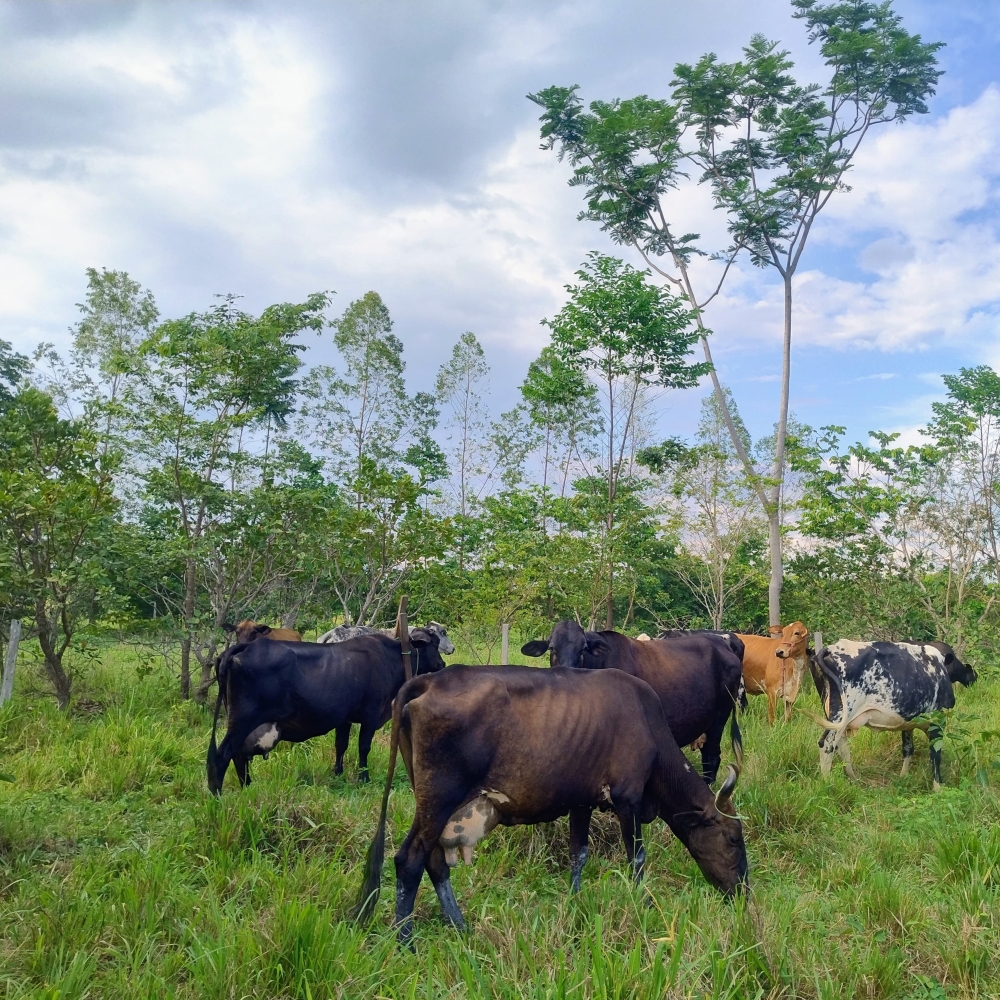
Photo above: A silvopastoral system observed in Colíder, Mato Grosso, Brazil, shows cattle grazing in a pasture integrated with trees on a family farm participating in the study. Photo by Edison Fernando Tamanini. |
|
|
|
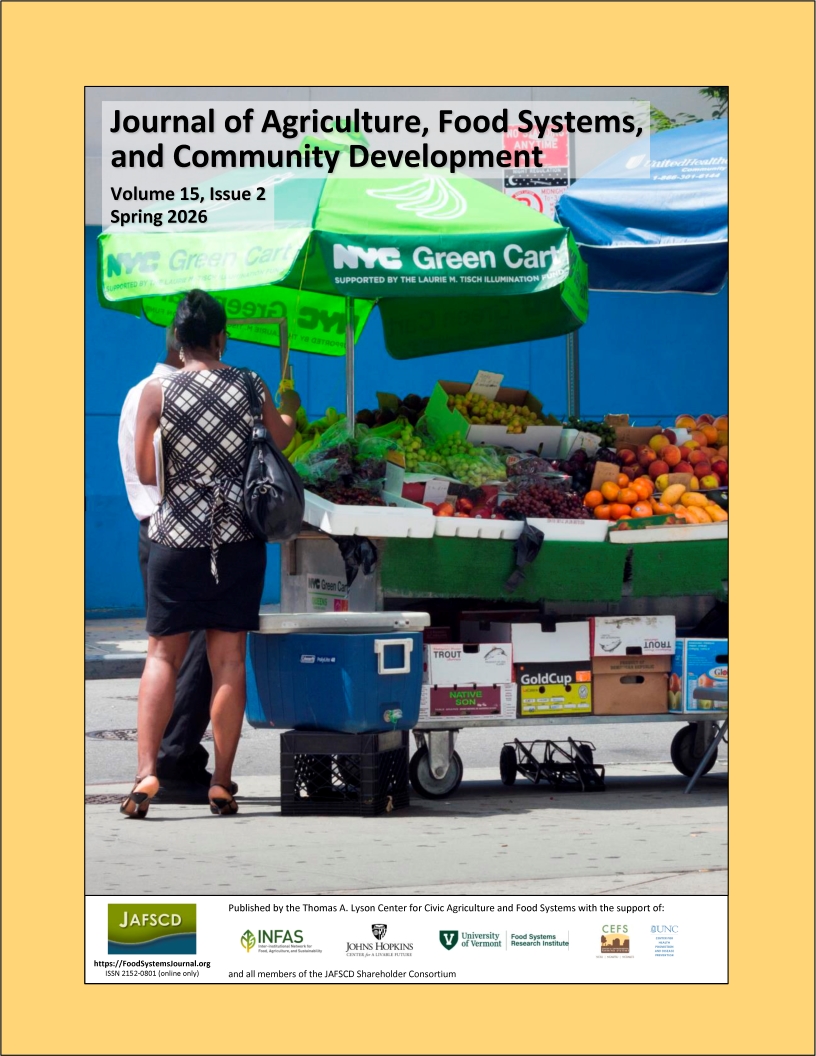
Cover photo credit: © Littleny, ID 26656408 | Dreamstime.com |
|
| The spring 2026 issue shares 20 open call papers on a wide range of food systems topics, many aimed at righting systemic food and farming inequalities — to quote the editorial from editor-in-chief Duncan Hilchey. They’re joined by 2 columns, a viewpoint, a commentary, and 15 book reviews!
On our cover, a NYC Green Cart on a street in Jamaica, Queens, New York, is one of many that sell fresh fruits and vegetables to promote healthy eating in neighborhoods that lack access. See the article Sustaining mobile produce vending in NYC: Evaluating the future of Green Carts, for an analysis of the successes and challenges of the NYC Green Carts program.
|
|
|
|
You can read or download any of the articles or the entire issue for free, as always. |
|
|
|
EVENT FROM A KINDRED ORGANIZATION |
|
|
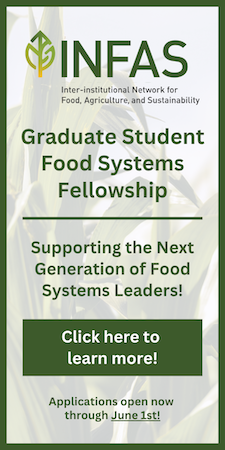
| INFAS Food Systems Fellowship Application for 2026–2027
The INFAS Food Systems Fellowship (FSF) Program for 2026–2027 welcomes applications from graduate students who aim to engage with communities in their food systems–related field of study. This fellowship program provides professional development and mentoring, generally, and toward engaging with communities in ethical and respectful ways in students’ present or future research and work, specifically. Applications must be received by June 1, 2026. |
|
|
|
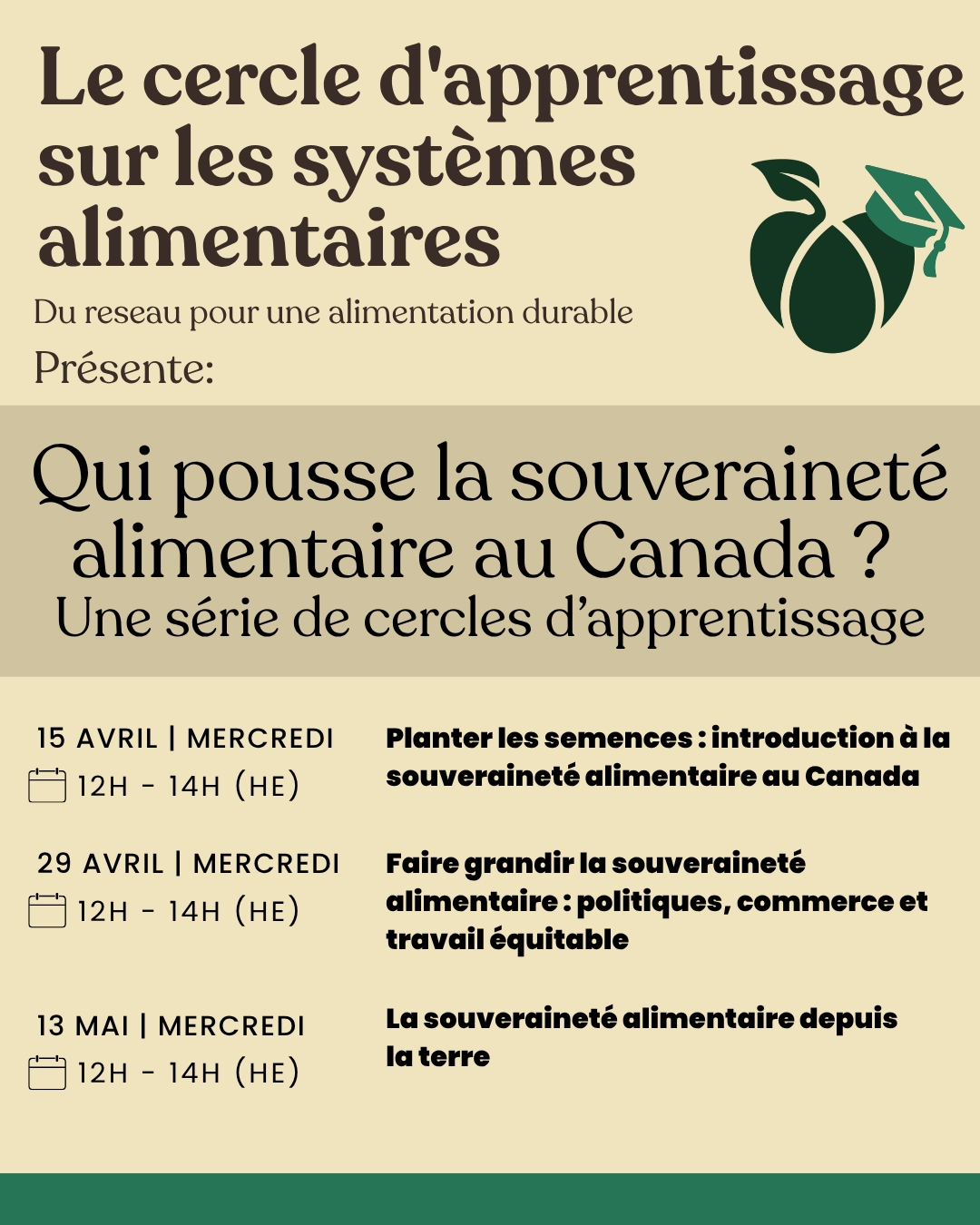
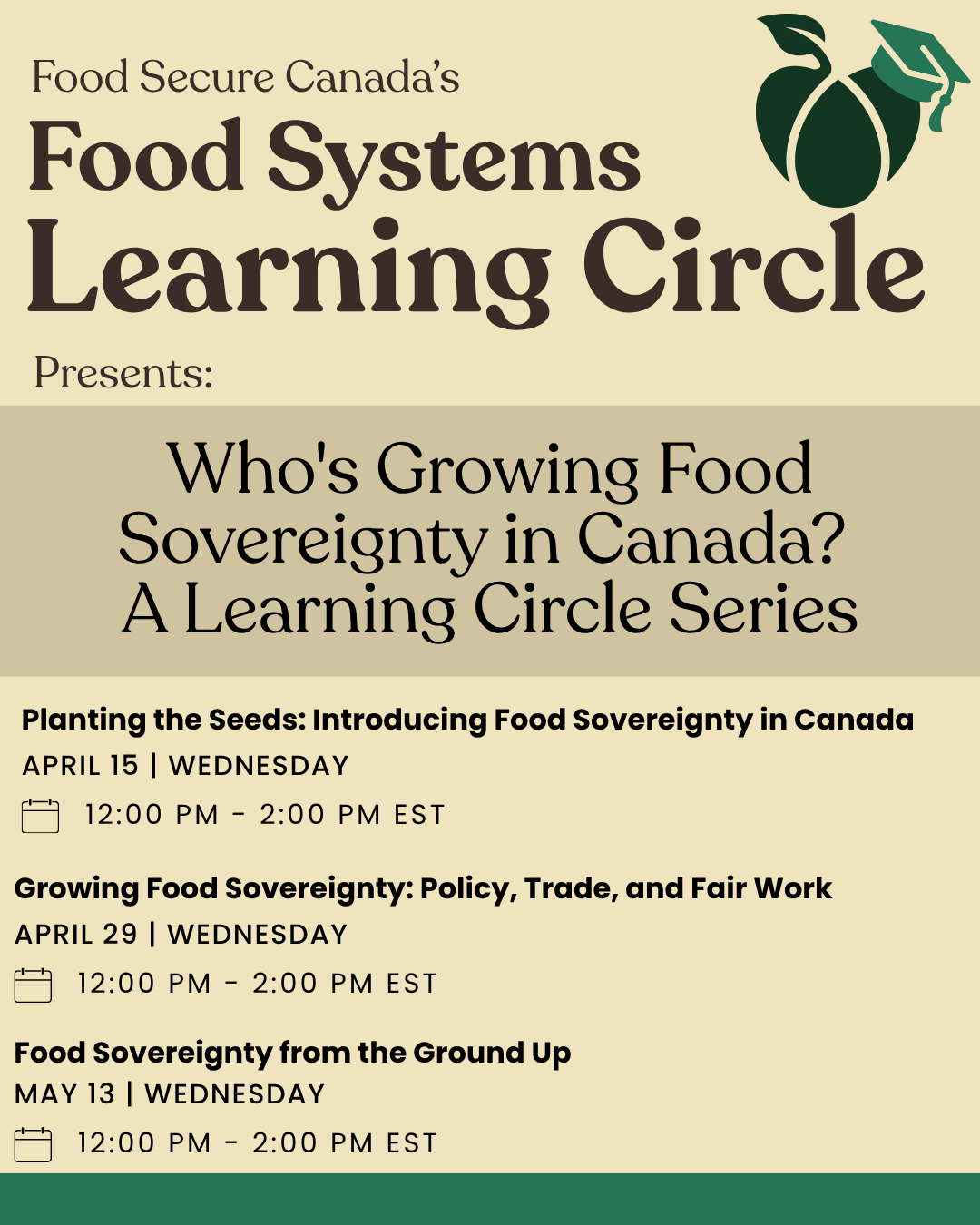
Who's Growing Food Sovereignty in Canada?
Join Food Secure Canada for a new workshop series
Food Secure Canada is launching the Food Systems Learning Circle with a three-part online workshop series: Who's Growing Food Sovereignty in Canada? |
|
|
|
- Workshop 2 — Growing Food Sovereignty: Policy, Trade, and Fair Work Wednesday, April 29 | 12:00–2:00 PM ET
-
Workshop 3 — Food Sovereignty from the Ground Up Wednesday, May 13 | 12:00–2:00 PM ET
Speakers include Raj Patel (U of Texas, Austin), Celeste Smith (National Farmers Union), Chris Ramsaroop (Justicia for Migrant Workers), Toyin Kayo-Ajayi (Canadian Black Farmers Association), Tabitha Robin (UBC), Joseph LeBlanc (NOSM University), Geneviève Lalumière (Union Paysanne), and Cathy Holtslander (National Farmers Union).
Sessions are held online in English with French interpretation. Recordings will be available to all registered participants. Pricing: - Single session: $60 standard | $30 student/unwaged | $15 solidarity
- Full series: $150 standard | $70 student/unwaged | $40 solidarity
No one will be turned away for lack of funds. If cost is a barrier, please reach out before registering.
Register here |
|
|
|
This email is sent to you as a notification of the newest JAFSCD articles and other occasional JAFSCD news. |
|
|
JAFSCD is an open access, community-supported journal! Your library, program, or organization can become a shareholder to help keep JAFSCD's content available to all, regardless of their resources. We welcome anyone to become an individual shareholder; donations are tax-deductible to the extent allowed by law.
|
|
|
|
|