from the Journal of Agriculture, Food Systems, and Community Development |
|
|
JAFSCD is the world’s only community-supported journal. JAFSCD content is open access (free) thanks to the generous support of our shareholders: the JAFSCD Shareholder Consortium, Library Shareholders, a growing number of Individual Shareholders, and our JAFSCD Partners: |
|
|
JAFSCD peer-reviewed article by Sara María Cano-Bedoya (U de Antioquia), Jennifer Marcela López-Ríos (U de Antioquia), Leisy Cruz-Rodríguez (U Surcolombiana), Juan Camilo Calderón-Farfán (U Surcolombiana), and Luz Nidia Finscue-Pete (Resguardo Indígena Nasa Paéz-Huila) Hunger and food insecurity remain persistent global challenges and disproportionately affect Indigenous Peoples. In Colombia, Indigenous communities in the department of Huila face high levels of food insecurity and malnutrition, closely linked to territorial dispossession, the erosion of ancestral practices, and the transformation of traditional food systems.
In a new article, Community strategies for strengthening food autonomy and buen vivir in a Nasa Indigenous Reservation, Colombia: A community-based participatory research (CBPR) approach, authors Sara María Cano-Bedoya, Jennifer Marcela López-Ríos, Leisy Cruz-Rodríguez, Juan Camilo Calderón-Farfán, and Luz Nidia Finscue-Pete document a community-based participatory research (CBPR) process carried out between 2023 and 2025 with the Nasa Páez Huila Indigenous Reservation. The study describes how the community co-constructed strategies to strengthen food autonomy and buen vivir (good living) by integrating ancestral knowledge, agroecological practices, and community organization. The findings highlight the value of participatory, intercultural approaches in advancing Indigenous food sovereignty and collective well-being.
Corresponding author Sara María Cano-Bedoya can be contacted at smaria.cano@udea.edu.co. KEY FINDINGS The community co-developed five strategies to strengthen food autonomy:
Recovery of native seeds: This strategy focused on rescuing and reintroducing traditional seeds that had been lost or replaced following forced displacement and the expansion of coffee monoculture. Seeds such as native corn, beans, onions, garlic, and cilantro were recovered from ancestral Nasa territories in Tierradentro (Cauca). The recovery of seeds was understood as a cultural, political, and spiritual act that reinforces food autonomy, and collective territorial memory
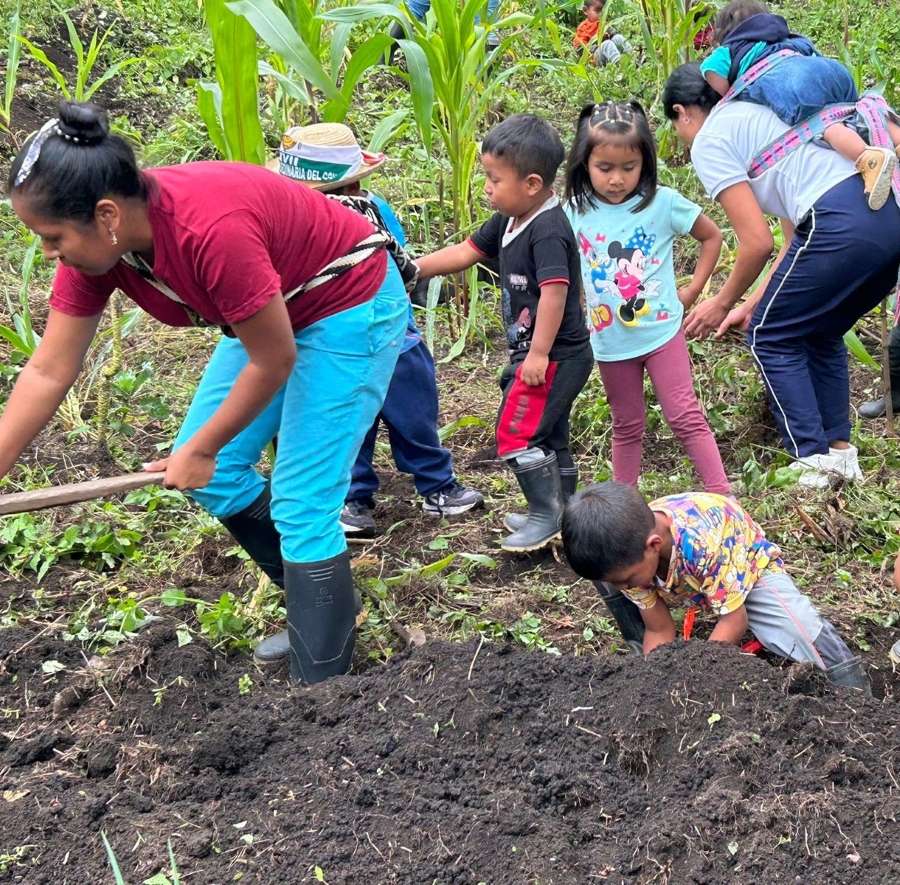
Implementation of demonstrative tul (traditional household gardens): These gardens were developed through community mingas at educational and early childhood care centers and were accompanied by ritual harmonization ceremonies led by spiritual authorities. The tul function as agroecological, pedagogical, and spiritual spaces that strengthen family ties, intergenerational knowledge transmission, and early engagement of children and youth with traditional food systems.
Development of a Nasa cropping calendar: The cropping calendar was co-created through interviews, circles of the word, and participatory workshops with community members and authorities. It systematizes ancestral agricultural knowledge related to lunar and solar cycles, climatic patterns, rituals, and seasonal activities specific to the territory. The calendar supports planning of planting, maintenance, and harvesting. Installation of community-based water filters: This strategy addressed access to safe water as a key determinant of food preparation, nutrition, and health. Through participatory workshops, community members learned to construct low-cost water filters using locally available materials and nature-based technologies, including phytoremediation systems.
A cross-cutting component of ongoing support, awareness-raising, and training: This component accompanied all other strategies through continuous agroecological training, community workshops, and follow-up visits to household tul over a one-year period. Community agricultural technicians provided technical assistance, monitored progress, and facilitated knowledge exchange among families. These activities strengthened local capacities, revitalized ancestral practices, and fostered collective learning and leadership within the community.
All strategies are rooted in the Nasa worldview, ancestral knowledge, and local capacities, reinforcing cultural identity and self-determination. The CBPR approach enabled intercultural co-production of knowledge, positioning community members as active researchers and decision-makers.
While nutritional impacts require long-term assessment, the process has already generated increased community participation, revitalization of ancestral practices, and the emergence of local leadership. RECOMMENDATIONS FOR POLICY, PRACTICE, AND RESEARCH For research: - Prioritize community-based participatory research (CBPR) methodologies that recognize Indigenous Peoples as knowledge holders and co-researchers.
For policy: - Develop and support public policies that guarantee Indigenous food autonomy and sovereignty, including protection of native seeds, land tenure, and access to water.
- Adapt food and nutrition policies to local contexts and Indigenous worldviews.
For practice: - Strengthen intercultural education and agroecological training, with particular attention to women, children, and youth.
- Promote intergenerational knowledge exchange to sustain and revitalize ancestral food practices.
SHARE ON YOUR SOCIALS
How can Indigenous communities strengthen food autonomy through their own knowledge and practices? A new open-access JAFSCD article from Colombia shows how participatory research and ancestral agroecology support the value of buen vivir (good living) and Indigenous food sovereignty. Read the full @JAFSCD article for free: https://doi.org/10.5304/jafscd.2026.152.012
#Indigenous #foodautonomy #Colombia #participatoryresearch #ancestralagroecology |
|
|
Photo above: Community minga for the construction of a pilot tul (traditional household garden), where native seeds are cultivated as part of food autonomy strategies, 2024. Source: From the photographic record of the project, provided by the authors. |
|
|
|
Following up on the 7th JAFSCD Community Annual General Meeting on March 18, notes and links to the recording and slide deck are here. We welcome you to catch up on JAFSCD's activities and community news!
|
| |
ANNOUNCEMENT FROM JAFSCD PARTNER UVM |
|
|
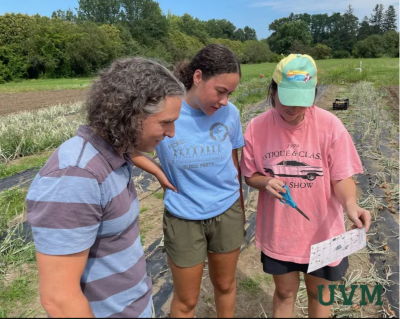
The University of Vermont launches fully online
Master of Science in Agroecology
The program, the first of its kind in the U.S., was designed for professionals already working in food systems who want to deepen their practice without leaving their communities. It was created by the UVM Department of Agriculture, Landscape & Environment and the UVM Institute for Agroecology, shaped by conversations with farmers, organizers, policymakers, and students who emphasized that transforming food systems requires new ways of learning and collaborating.
Students will engage in core courses in agroecology, participatory action research, and food sovereignty, and complete a master’s project that integrates ecological, social, and political dimensions of agroecology. The program’s faculty bring extensive experience in community?engaged research, social transformation, and global movement work. Applications for the first cohort are due July 15, 2026. Find out more by attending an upcoming webinar:
Agroecology at UVM: Cultivating a Thriving Planet through Knowledge and Action
Thursday, April 9 | 4:00 PM to 5:30 PM EDT | Virtual or in-person
Read a story about the program — First-of-its kind Master's in Agroecology at UVM benefits from close ties to UVM's Institute for Agroecology — and get more info at LinkedIn, Instagram, and Facebook.
|
|
|
JAFSCD SHAREHOLDER'S EVENT |
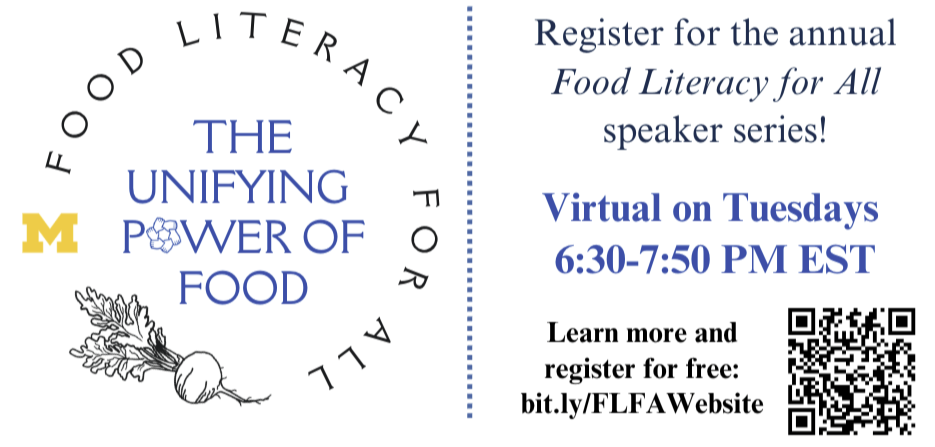
Food Literacy for All is a community-academic partnership course at the University of Michigan, now in its 10th year. From January to April, Food Literacy for All features a dynamic session each Tuesday evening (6:30-7:50 pm ET) that addresses the challenges and opportunities of diverse food systems. All sessions are on Zoom and recordings are shared afterward. Upcoming sessions: -
March 31: Solidarity Kitchens in Brazil: Fighting Hunger and Building Change with Pedro Ferraracio Charbel (chief editor of Jatobá, the social-environmental magazine, and active member of the Homeless Workers Movement and the Socialism and Liberty Party)
-
April 7: The Farmers Land Trust and the Farmland Commons: A New Model for Land Access, Ownership & Tenure
- April 14: Fast Food for Thought with Ten UM Faculty 5-minute Flash Talks (hybrid event)
- April 21: Course Reflection
See the schedule and register for free as a community member on the website. Registration is rolling, so you can sign up anytime and attend the sessions that interest you. Register once and received reminders of each week's webinar.
|
|
|
This email is sent to you as a notification of the newest JAFSCD articles and other occasional JAFSCD news. |
|
JAFSCD is an open access, community-supported journal! Your library, program, or organization can become a shareholder to help keep JAFSCD's content available to all, regardless of their resources. We welcome anyone to become an individual shareholder; donations are tax-deductible to the extent allowed by law.
|
|
| |