from the Journal of Agriculture, Food Systems, and Community Development |
|
|
JAFSCD is the world’s only community-supported journal. JAFSCD content is open access (free) thanks to the generous support of our shareholders: the JAFSCD Shareholder Consortium, Library Shareholders, a growing number of Individual Shareholders, and our JAFSCD Partners: |
|
|
JAFSCD peer-reviewed article by Katherine Tomaino Fraser, Dr. Rositsa T. Ilieva, Jacquelyn Sullivan, Julia Greene, Mukta Mohnani, Craig Willingham, and Dr. Nevin Cohen (CUNY Urban Food Policy Institute, CUNY Graduate School of Health and Health Policy)
Mobile produce vending offers a flexible, low-cost way to expand access to fresh fruits and vegetables in urban areas where healthy food is scarce. In New York City, the Green Carts program was launched to increase produce access in underserved neighborhoods while supporting immigrant entrepreneurship through mobile vending. However, sustaining these dual goals of public health and economic opportunity has proven challenging.
In a new JAFSCD article, Sustaining mobile produce vending in NYC: Evaluating the future of Green Carts, authors Fraser, Ilieva, Sullivan, Greene, Mohnani, Willingham, and Cohen present findings from a multimethods evaluation of the Green Carts program. The study examines how well the program continues to improve food access and economic opportunity more than a decade after its launch, exploring trends in vendor participation, income sustainability, and accessibility for low-income consumers.
Corresponding author Katherine Tomaino Fraser can be contacted at katherine.tomaino@sph.cuny.edu. KEY FINDINGS
Green Carts improve food access but face declining participation. Active vendor permits dropped from more than 490 in 2013 to fewer than 200 by 2022, limiting reach in low-income communities.
Vendors earn well below a living wage. Median annual vendor income was approximately $20,000, reflecting long hours and high operating costs that make vending economically unsustainable for many.
Limited EBT acceptance restricts low-income customer access. Only 3.1% of vendors accepted SNAP/EBT by 2022, down from 34% in 2016, reducing access for food-insecure households.
Carts are unevenly distributed across neighborhoods. Over half of NYC public housing developments are located beyond a 10-minute walk from a Green Cart, with vendors gravitating toward high-traffic commercial areas instead.
Vendors cite autonomy but face systemic barriers. Immigrant entrepreneurs value self-employment and schedule control but report challenges with weather protection, complex permitting, and inconsistent city support.
RECOMMENDATIONS FOR POLICY, PRACTICE, AND RESEARCH
Provide financial and technical assistance for vendors including grants, permit subsidies, and business training to strengthen vendor sustainability.
Expand EBT access by subsidizing equipment costs and offering onboarding support to vendors. Incentivize vending near public housing and food-insecure areas through geographic targeting and vendor storage support. Streamline regulatory processes to reduce non-critical fines and simplify permitting requirements.
Integrate Green Carts into broader city food equity strategies alongside farmers markets, mobile markets, and nutrition incentive programs. Conduct longitudinal research on the health and dietary outcomes associated with mobile produce vending access.
SHARE ON YOUR SOCIALS
Can mobile produce vending be sustained as both a public health tool and a small business model? A new peer-reviewed study on New York City’s Green Carts explores the future of the #GreenCarts program. Read the full @JAFSCD article for free: https://doi.org/10.5304/jafscd.2026.152.010
|
|
|
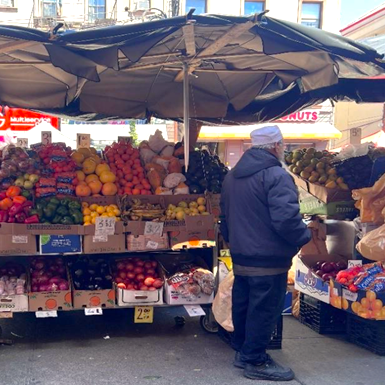
Photo above: A Green Cart in New York displays its wares. Photo provided by the authors. |
|
|
|
Following up on the 7th JAFSCD Community Annual General Meeting on March 18, notes and links to the recording and slide deck are here. We welcome you to catch up on JAFSCD's activities and community news!
|
|
|
ANNOUNCEMENT FROM JAFSCD PARTNER UVM |
|
|
The University of Vermont launches fully online
Master of Science in Agroecology
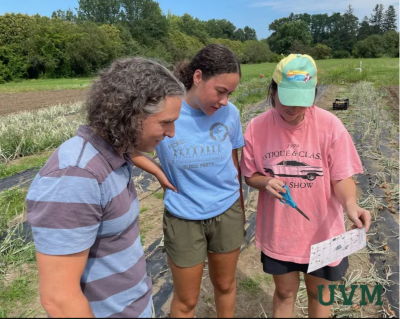
The program, the first of its kind in the U.S., was designed for professionals already working in food systems who want to deepen their practice without leaving their communities. It was created by the UVM Department of Agriculture, Landscape & Environment and the UVM Institute for Agroecology, shaped by conversations with farmers, organizers, policymakers, and students who emphasized that transforming food systems requires new ways of learning and collaborating.
Students will engage in core courses in agroecology, participatory action research, and food sovereignty, and complete a master’s project that integrates ecological, social, and political dimensions of agroecology. The program’s faculty bring extensive experience in community‑engaged research, social transformation, and global movement work. Applications for the first cohort are due July 15, 2026. Find out more by attending a webinar:
Agroecology at UVM: Cultivating a Thriving Planet through Knowledge and Action
Thursday, April 9 | 4:00 PM to 5:30 PM EDT | Virtual or in-person
Read a story about the program — First-of-its kind Master's in Agroecology at UVM benefits from close ties to UVM's Institute for Agroecology — and get more info at LinkedIn, Instagram, and Facebook.
|
|
|
JAFSCD SHAREHOLDER'S EVENT |
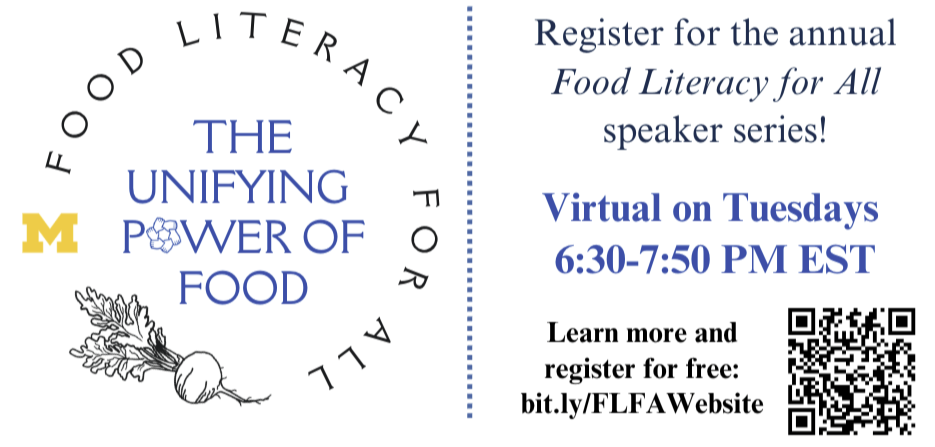
Food Literacy for All is a community-academic partnership course at the University of Michigan, now in its 10th year. From January to April, Food Literacy for All features a dynamic session each Tuesday evening (6:30-7:50 pm ET) that addresses the challenges and opportunities of diverse food systems. All sessions are on Zoom and recordings are shared afterward. Upcoming sessions: -
March 24: Book Talk: Life and Death of the American Worker with Dr. Alice Driver (author) and Dr. Allan Hruska (Facilitator)
March 31: Solidarity Kitchens in Brazil: Fighting Hunger and Building Change with Pedro Ferraracio Charbel (chief editor of Jatobá, the social-environmental magazine, and active member of the Homeless Workers Movement and the Socialism and Liberty Party)
April 7: The Farmers Land Trust and the Farmland Commons: A New Model for Land Access, Ownership & Tenure
April 14: Fast Food for Thought with Ten UM Faculty 5-minute Flash Talks (hybrid event) April 21: Course Reflection
See the schedule and register for free as a community member on the website. Registration is rolling, so you can sign up anytime and attend the sessions that interest you. Register once and received reminders of each week's webinar.
|
|
|
This email is sent to you as a notification of the newest JAFSCD articles and other occasional JAFSCD news. |
|
JAFSCD is an open access, community-supported journal! Your library, program, or organization can become a shareholder to help keep JAFSCD's content available to all, regardless of their resources. We welcome anyone to become an individual shareholder; donations are tax-deductible to the extent allowed by law.
|
|
| |