from the Journal of Agriculture, Food Systems, and Community Development |
|
|
JAFSCD is the world’s only community-supported journal. JAFSCD content is open access (free) thanks to the generous support of our shareholders: the JAFSCD Shareholder Consortium, Library Shareholders, a growing number of Individual Shareholders, and our JAFSCD Partners: |
|
|
Using a novel research method of “Draw and Reflect” reveals community food values.
Local and regional food systems are vital to food security, economic health, and social connectedness. As interest and investment in these systems continue to grow, understanding community priorities is essential to building food systems that are effective and resilient. By engaging the public in conversations about food access, insecurity, and sustainability, communities can identify shared goals and inform policies that strengthen local food systems to better withstand environmental and social challenges.
In a new JAFSCD article, Nourishing connections: An arts-informed approach to illuminating community food values, Dr. Rachel Zollinger and Dr. Gigi Owen present findings from a community-based study that piloted a novel arts-informed methodology to explore how people perceive nourishment and envision strategies for creating a more sustainable local food system.
Corresponding author Rachel Zollinger can be contacted at rkzolli@uark.edu.
KEY FINDINGS Nourishment is a multidimensional concept that extends beyond access to food and nutrients to include social, cultural, and environmental connections.
The method of combining art-making with interviews offers distinct benefits to both participants and researchers and nurtures multiple forms of dialogue. Participants’ drawings and interviews highlighted themes that are essential to resilient local food systems, including community cohesion, environmental stewardship, and local economic development.
RECOMMENDATIONS FOR POLICY, PRACTICE, AND RESEARCH
Integrate a holistic understanding of nourishment into food-related policies and programs by recognizing the importance of social connection, ecological health, and local economic development alongside food access. Support community organizations in applying arts-informed methods to gather public insights that strengthen strategic planning, community alignment, and policy advocacy. Encourage researchers to incorporate arts-informed methods in community-based research to expand participation, enrich qualitative data, and enhance the credibility of findings.
SHARE ON YOUR SOCIALS
What does an arts-informed method reveal about community food values? How can a community organization utilize research findings to inform local food advocacy? #foodvalues #foodsystems #artinformed #DrawandReflect
Read the full @JAFSCD article for free: https://doi.org/10.5304/jafscd.2026.152.011 |
|
|
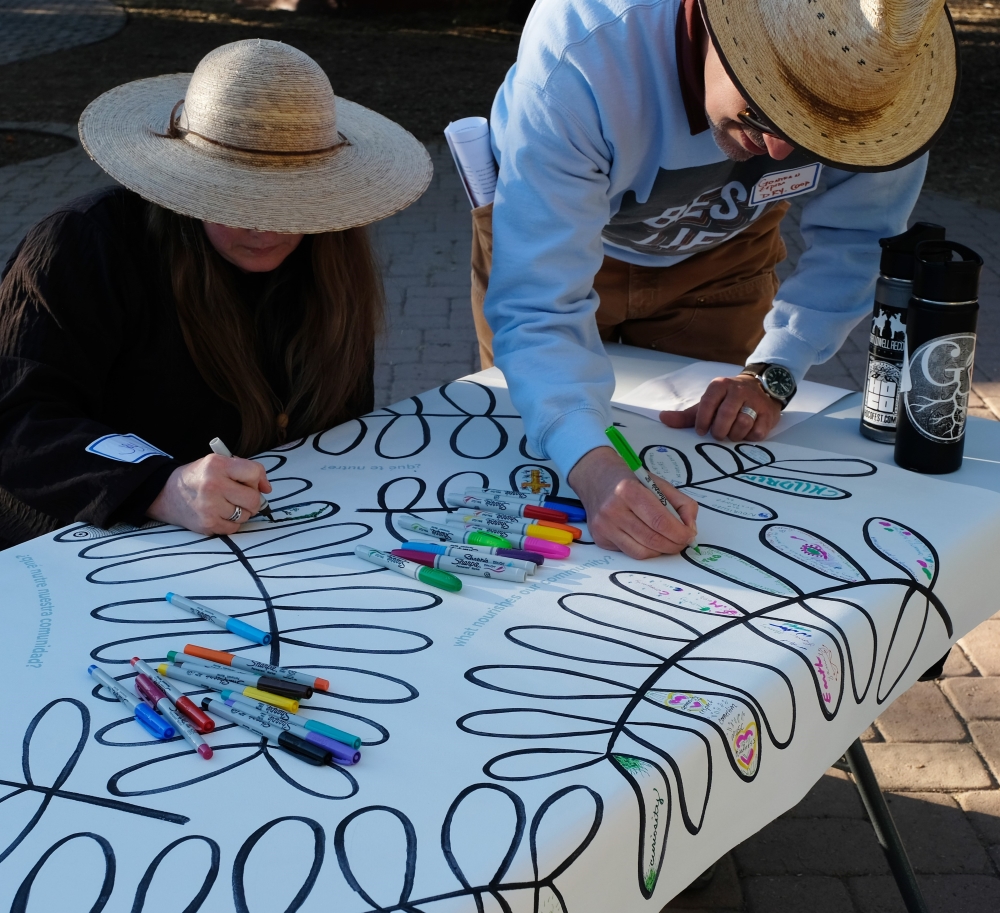
Photo above: At a free, public event in May 2024 hosted by an art museum in Tucson, Arizona, study participants were asked to draw in response to two prompts about nourishment on a shared canvas: (1) What nourishes you? (2) What nourishes our community? Photo provided by the authors. |
|
|
From the review:
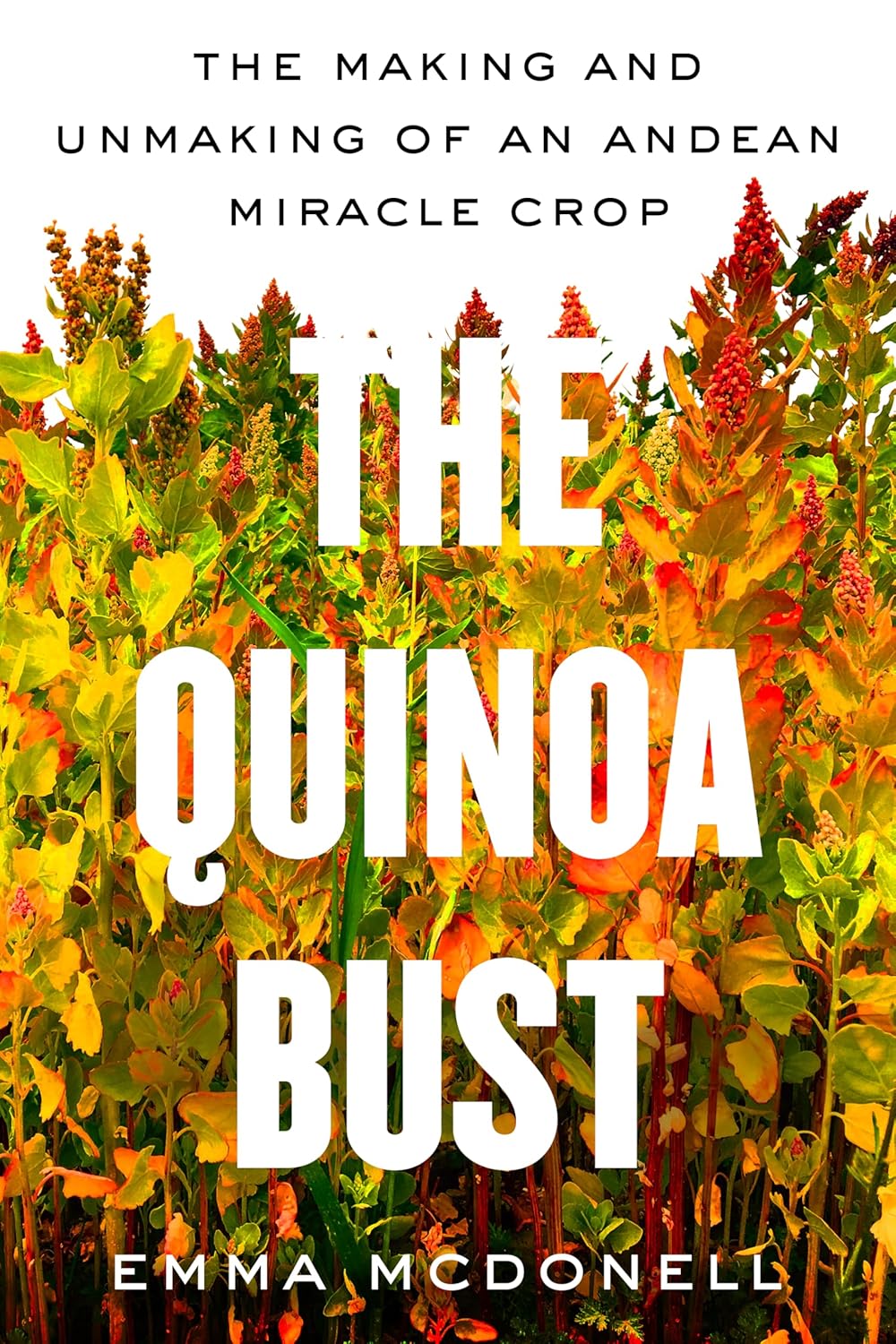
While the book’s title foreshadows the inevitable bust of quinoa, it presents a much more nuanced accounting of the distribution of impact from quinoa’s rise and fall across its many stakeholders. In the book’s first section, “Miracle Crop,” the actions of local actors are presented against the backdrop of efforts by national governments and international NGOs to promote quinoa as a vehicle for sustainable development. … The social and ecological changes brought on by the boom left Andean farmers exposed both to market forces and to a changing climate. Many farmers departed from their traditional production systems, which featured diverse varieties of quinoa, types of crops, and sources of income, to focus on commercial quinoa production. …
Read the entire book review, for free, at JAFSCD.
|
|
|
JAFSCD SHAREHOLDER'S EVENT |
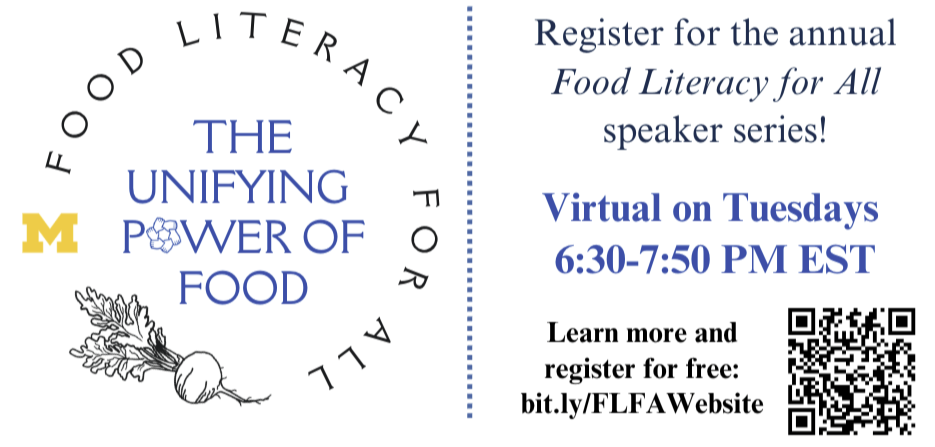
Food Literacy for All is a community-academic partnership course at the University of Michigan, now in its 10th year.
From January to April, Food Literacy for All features a dynamic session each Tuesday evening (6:30-7:50 pm ET) that addresses the challenges and opportunities of diverse food systems. All sessions are on Zoom and recordings are shared afterward. Upcoming sessions include: - March 17: The Foundation of Food: The Science and Politics of Our Changing Soils, with Dr. Asmeret Asefaw Berhe (Director of the Sierra Nevada Research Institute and Climate Institute; University of California, Merced)
-
March 24: Book Talk: Life and Death of the American Worker with Dr. Alice Driver (author) and Dr. Allan Hruska (Facilitator)
See the schedule and register for free as a community member on the website. Registration is rolling, so you can sign up anytime. As a registrant, you can attend the sessions that interest you. Register once and received reminders of each week's webinar. |
|
|
This email is sent to you as a notification of the newest JAFSCD articles and other occasional JAFSCD news. |
|
JAFSCD is an open access, community-supported journal! Your library, program, or organization can become a shareholder to help keep JAFSCD's content available to all, regardless of their resources. We welcome anyone to become an individual shareholder; donations are tax-deductible to the extent allowed by law.
|
|
| |