from the Journal of Agriculture, Food Systems, and Community Development |
|
|
JAFSCD is the world’s only community-supported journal. JAFSCD content is open access (free) thanks to the generous support of our shareholders: the JAFSCD Shareholder Consortium, Library Shareholders, a growing number of Individual Shareholders, and our JAFSCD Partners: |
|
|
Exploring how social innovation strategies can enhance the competitiveness of agroecological businesses owned by women in rural Colombia.
Women entrepreneurs fact marketing challenges in rural Colombia. To overcome these, a new study identifies how social innovation strategies — such as product diversification and digital marketing — can enhance the competitiveness of agroecological businesses.
In rural communities, small-scale producers are critical to local food security and environmental sustainability. Yet they often face significant hurdles in bringing their sustainable products to market, including limited access to distribution networks and technical training. Successfully overcoming these commercialization challenges is essential for their economic empowerment and for advancing the broader transition to resilient food systems in regions like Colombia.
In a new JAFSCD article, Social innovation strategies to improve agroecological product marketing: A case study in rural Colombia, authors Estíbaliz Aguilar-Galeano, Diana Marcela Diaz-Ariza, and Claudia Paola García-Castiblanco present initial findings from an exploratory community-university partnership research study that aimed to explore, document, and categorize existing and emergent strategies to leapfrog marketing barriers.
Corresponding author Estíbaliz Aguilar can be contacted at estibaliz.aguilar@uniagustiniana.edu.co. KEY FINDINGS Producers face significant challenges in commercializing products, primarily due to the high cost of certification, lack of technical resources, and unfair market competition from large retailers.
The research co-designed three practical, context-specific social innovation strategies: -
Product diversification: Transforming surplus vegetables into value-added goods (e.g., instant soups) to increase value and reach urban markets.
-
Digital marketing: Implementing a tailored plan to build brand visibility and reduce dependence on intermediaries.
-
Peer-to-peer networking: Proposing a mentorship system among experienced producers to democratize the process of obtaining costly market certifications.
-
These social innovations seek to promote the economic empowerment of women and ensure the sustainability and competitiveness of agroecological food systems in the region.
RECOMMENDATIONS FOR POLICY, PRACTICE, AND RESEARCH Policy and institutional action: -
Implement flexible, affordable certification models (e.g., cooperative certification) to make formal markets accessible to small producers.
Provide public funding for shared agro-industrial infrastructure (processing, storage) to enable value-added production. Enact measures like minimum price guarantees and preferential public procurement to shield small farmers from unfair competition.
Practice and implementation: - Utilize peer-to-peer mentorship and cooperative learning to build collective capacity and knowledge-sharing within producer associations.
- Invest in training for digital marketing and brand development to improve visibility and direct sales in e-commerce channels.
- Maintain strong partnerships between producers, academia, and civil society to ensure practical, relevant, and transformative solutions.
Future research agenda: -
Conduct longitudinal studies to measure the economic and social performance of the co-designed social innovation strategies (diversification, digital marketing, etc.).
- Initiate comparative studies across Latin America to identify region-specific constraints and innovations that can be scaled up.
SHARE ON YOUR SOCIALS
How do women farmers practicing agroecology overcome marketing barriers and thrive? New research from Universitaria Agustiniana in Colombia shows that the answer lies in Social Innovation! Small-scale women entrepreneurs are crucial to sustainable food systems, but they often struggle to sell their goods. This is more than business — it's about economic empowerment and securing the future of sustainable food. Policymakers, it’s time to simplify those market rules!
Read the full @JAFSCD article for free: https://doi.org/10.5304/jafscd.2026.152.003
|
|
|
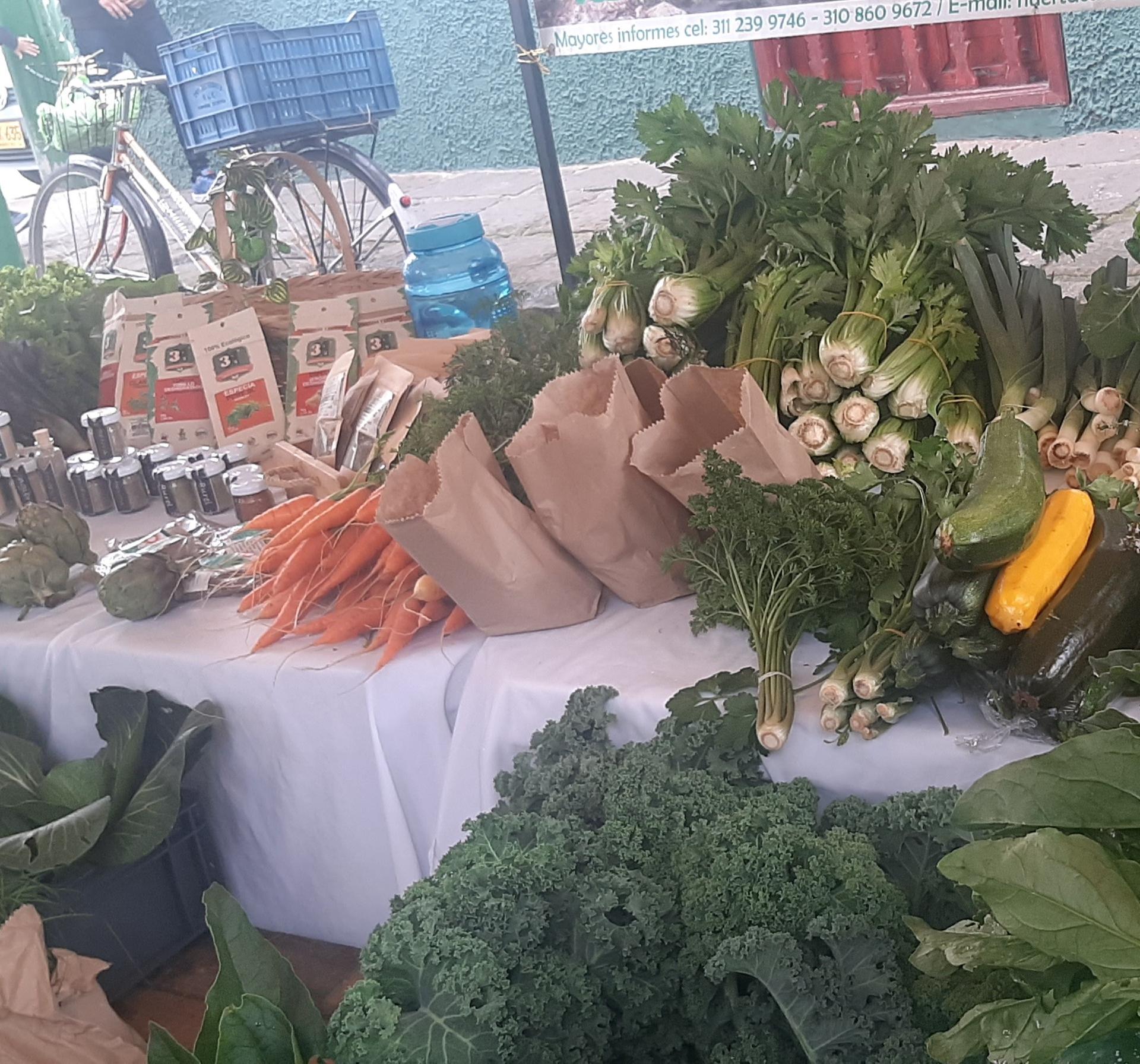
Photo above: Products sold by female farmers in the local market in Tenjo, Colombia; photo provided by the authors. |
|
|
From the review:
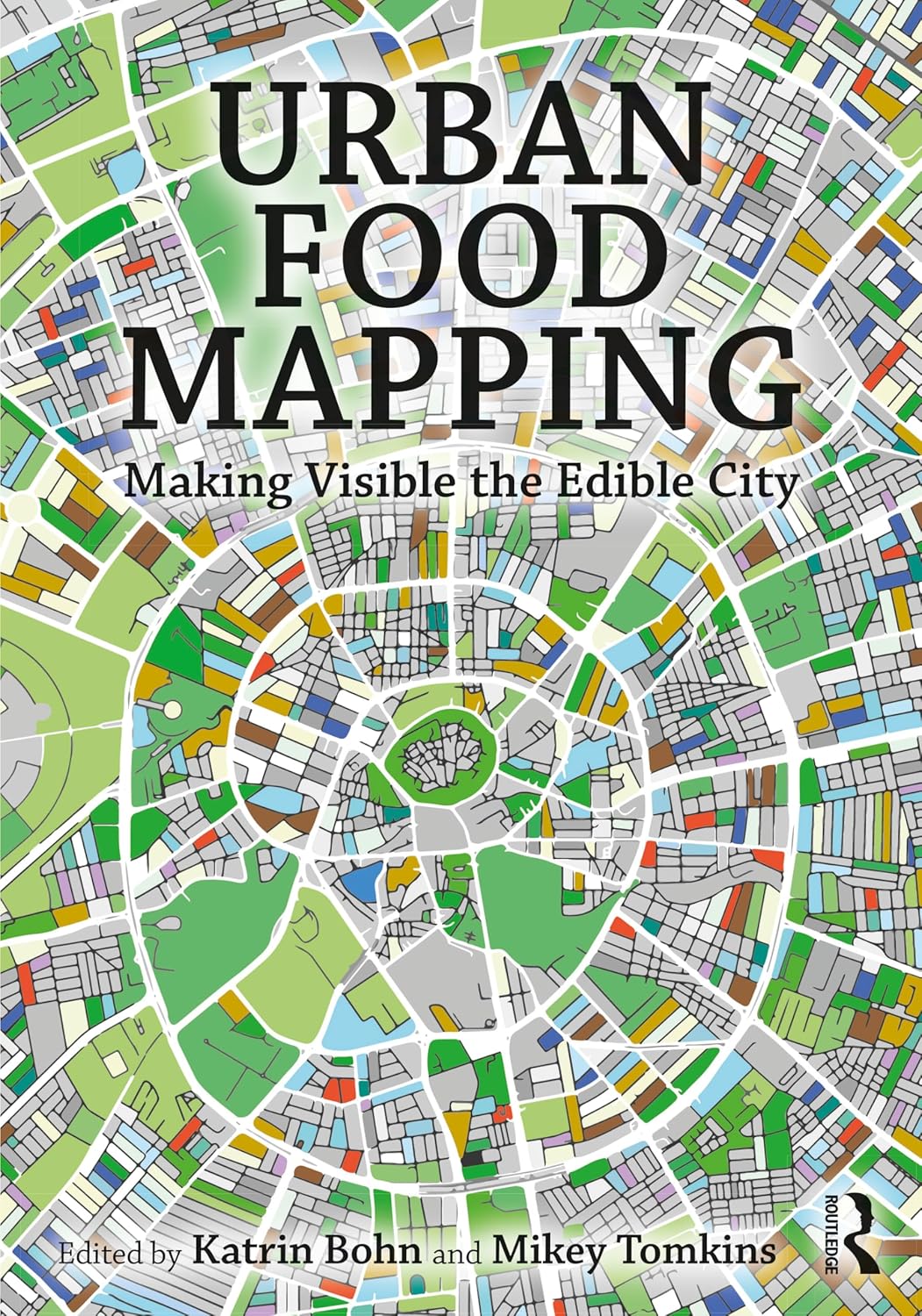
In this era defined by rapid urbanization and increasingly complex, precarious global food supply chains, the essential question of “how we feed ourselves as an urban species” has taken on increased urgency. Urban Food Mapping: Making Visible the Edible City, edited by architect Katrin Bohn and researcher Mikey Tomkins, addresses this question by celebrating and systematizing the act of food mapping as an area of research and design practice. . . . Bohn and Tomkins provide an urban food mapping matrix to systematically organize and review urban food maps. This matrix includes five major themes that guide the organization of this book: food growing sites, food system activities, food produce and culture, food networks and resources, and food stakeholders...
Read the entire book review, for free, at JAFSCD. |
|
|
From the review:
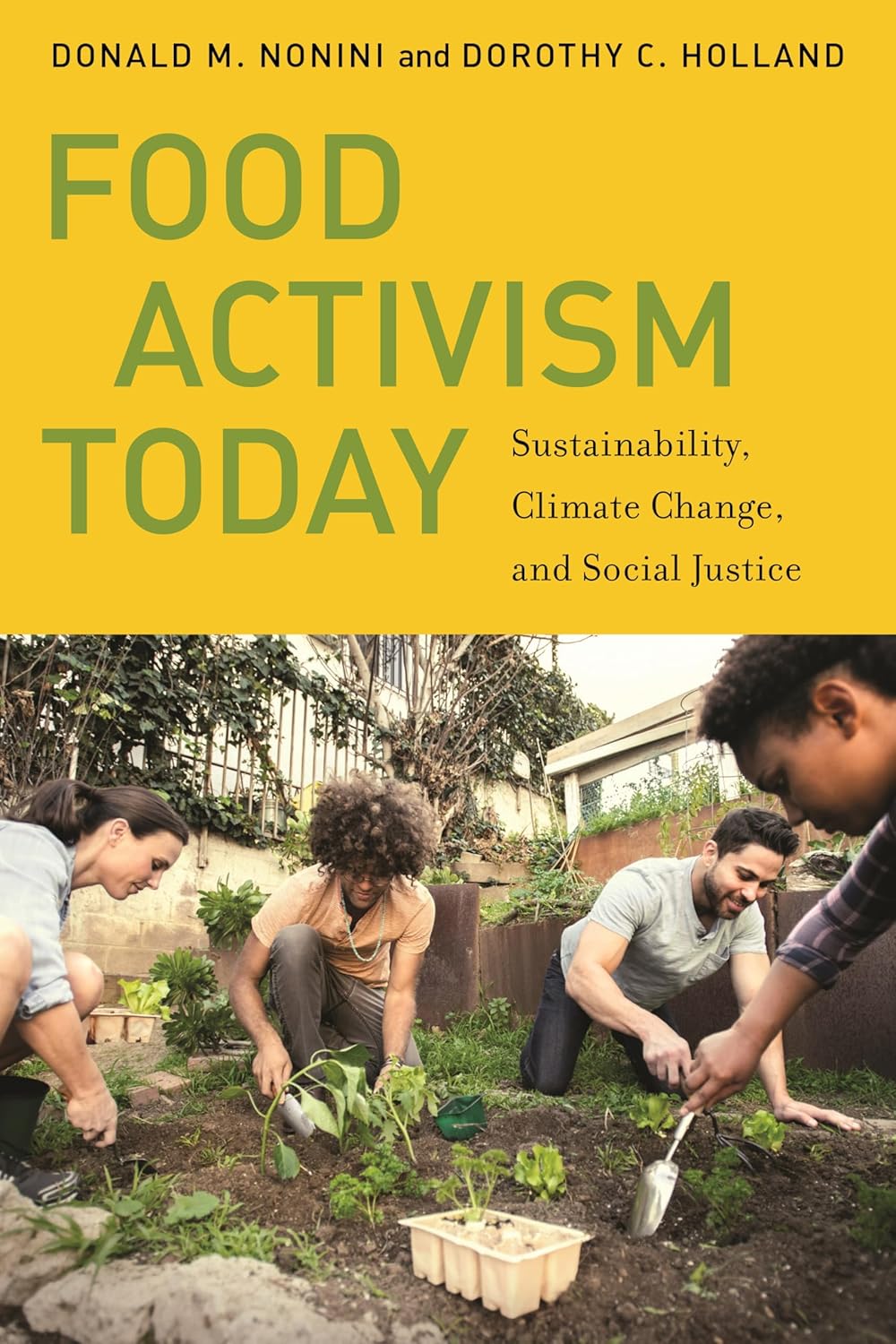
The book examines what the authors call the corporate industrial food alliance through an interrogation of the neoliberal global regime ("transnational food corporations, the US government, and international trade and financial institutions" that conspire to disinvest local food economies of choice, agency, and sovereignty), before pivoting to an exploration of possible alternatives to the bleak and fallow future sown by the pursuit of agri-market hegemony over community and ecosystem health. . . . The authors contrast the discursive positions of global food conglomerates whose goals are the industrial-scale provisioning of cheap, abundant monocrops across national borders with the often microscale, biodiverse specifics that make up a global patchwork of small farms, each with idiosyncratic goals, methods, and production agendas. . . .
Read the entire book review, for free, at JAFSCD. |
|
|
JAFSCD SHAREHOLDER'S EVENT |
|
|
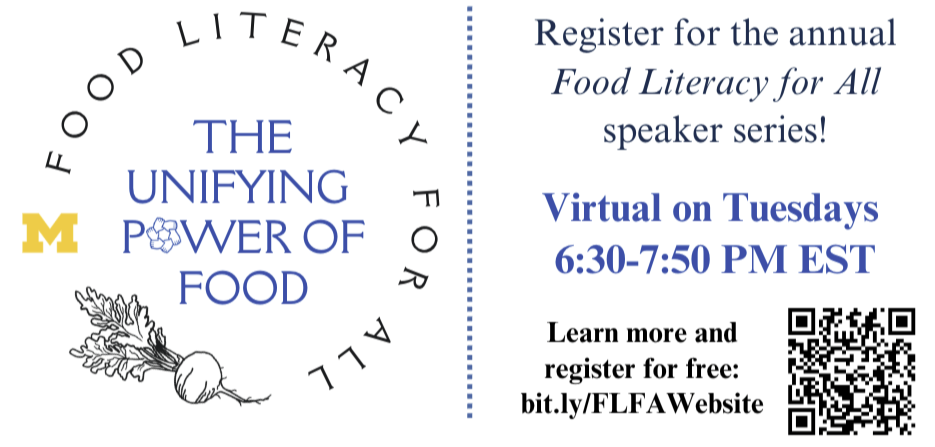
Food Literacy for All is a community-academic partnership course at the University of Michigan, now in its 10th year.
From January to April, Food Literacy for All features a dynamic session each Tuesday evening (6:30-7:50 pm ET) that addresses the challenges and opportunities of diverse food systems. All sessions are on Zoom and recordings are shared afterward. Upcoming sessions include: - March 10: Panel of Urban Agriculture Directors, including Patrice Brown (associate director of urban agriculture, City of Detroit) and Rabekha Siebert (comprehensive urban agriculture plan manager, the City of Dallas)
-
March 17: The Foundation of Food: The Science and Politics of Our Changing Soils, with Dr. Asmeret Asefaw Berhe (Director of the Sierra Nevada Research Institute and Climate Institute; University of California, Merced)
See the schedule and register for free as a community member on the website. Registration is rolling, so you can sign up anytime. As a registrant, you can attend the sessions that interest you. Register once and received reminders of each week's webinar. |
|
|
This email is sent to you as a notification of the newest JAFSCD articles and other occasional JAFSCD news. |
|
JAFSCD is an open access, community-supported journal! Your library, program, or organization can become a shareholder to help keep JAFSCD's content available to all, regardless of their resources. We welcome anyone to become an individual shareholder; donations are tax-deductible to the extent allowed by law.
|
|
| |