from the Journal of Agriculture, Food Systems, and Community Development |
|
|
JAFSCD is the world’s only community-supported journal. JAFSCD content is open access (free) thanks to the generous support of our shareholders: the JAFSCD Shareholder Consortium, Library Shareholders, a growing number of Individual Shareholders, and our JAFSCD Partners: |
|
|
JAFSCD peer-reviewed article by Charles L. Tumuhe (Uganda Martyrs U), Denis Katusiime (U of Kisubi), David Ssekamatte (Uganda Management Institute), Joshua Muloi (U of Bonn), Keiron Audain (GAEA Management Services), Hannah Kamau (U of Bonn), Ronald Byaruhanga (Lund U), and Gonzalo A. R. Molina (Instituto Nacional de Tecnología Agropecuaria [INTA])
A new JAFSCD article highlights how civil society organizations are playing a critical role in advancing agroecological transitions in Uganda. The article, The role of civil society networks in catalyzing agroecological transitions in Uganda, by Charles L. Tumuhe of Uganda Martyrs University, examines how the Participatory Ecological Land Use Management (PELUM) Uganda network connects farmers, researchers, and policymakers to strengthen farmer-led innovation and influence national policy.
Using document reviews and key informant interviews, the research shows that civil society networks are central in linking grassroots initiatives with higher-level policy advocacy and in creating the social and institutional conditions necessary for agroecological transformation. Corresponding author Charles L. Tumuhe can be contacted at tumchaz34@gmail.com. KEY FINDINGS
Civil society organizations serve as vital connectors and catalysts in Uganda’s agroecology movement. Through coordinated action and trust-building, they link farmer experiences with national and regional advocacy platforms, enabling smallholder voices to influence decision-making processes.
Agroecological practices are expanding rapidly through collaboration and knowledge exchange, supported by more than 70 member organizations in the PELUM Uganda network, reaching over 3,000,000 farmers. These organizations foster joint learning, capacity-building, and participatory experimentation at the community level, while also driving institutional partnerships and joint policy initiatives at the national level. However, the research identifies several systemic challenges. These include limited documentation and dissemination of local innovations, fragmented collaboration among actors, short-term donor funding cycles, and uneven capacities across organizations. Such challenges can slow progress and limit the impact of agroecological efforts.
Despite these barriers, the study concludes that civil society organizations remain key actors in scaling agroecology by promoting shared learning, cross-sectoral alliances, and policy engagement. They are also instrumental in shaping the narrative of food systems transformation in Uganda — from a focus on productivity to one of resilience, equity, and sustainability.
RECOMMENDATIONS FOR POLICY, PRACTICE, AND RESEARCH
Policy: Governments and funding agencies should invest in long-term, consortium-based programs that bring together civil society organizations, research institutions, and government agencies to coordinate agroecology initiatives. Policymakers should also embed agroecology principles within national agricultural and climate policies and strategies, and ensure that funding frameworks recognize and reward collaborative, farmer-centered approaches.
Practice: Civil society organizations should strengthen their internal collaboration, documentation, and communication processes. They should use digital tools to capture farmers’ innovations, track progress, and share evidence across regions. Training programs and exchange visits should continue to enhance farmer leadership, gender inclusion, and youth engagement in agroecological enterprises.
Research: Scholars and research institutions should deepen the study of network dynamics in agroecology, focusing on how knowledge flows across organizations and regions. There is also a need to develop participatory monitoring frameworks that go beyond counting activities to measure changes in attitudes, cooperation, gender equity, and ecosystem health.
SHARE ON YOUR SOCIALS How can civil society turn local agroecology into national action? A new @JAFSCD article explores Uganda’s farmer networks shaping climate-resilient, equitable food systems.
Read it for free: https://doi.org/10.5304/jafscd.2026.152.004
Who drives food systems change, is it governments, donors, or the people on the ground?
In Uganda, civil society and farmer networks are proving that transformation begins in the soil and grows through collaboration. A new article in the Journal of Agriculture, Food Systems, and Community Development (JAFSCD) explores how partnerships, policy advocacy, and shared learning are food systems transformation through reshaping agroecology and food sovereignty. Read the full @JAFSCD article for free: https://doi.org/10.5304/jafscd.2026.152.004 #Agroecology #FoodSystems #CivilSociety #Uganda #JAFSCD #Sustainability #FarmerNetworks #ClimateAction
|
|
|
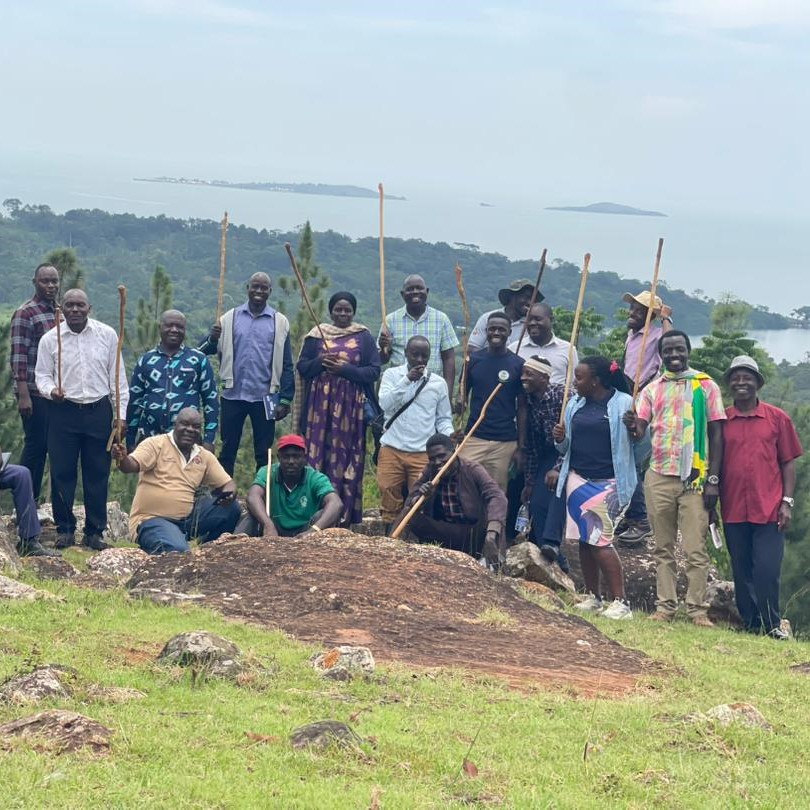
Photo above: Field activity sponsored by PELUM Uganda; photo provided by the authors. |
|
|
From the review:
A central theme of Bosso’s text is the paradoxical problem of “want amidst plenty.” He demonstrates that “plenty”—or the price-deflating surpluses of commodity crops—was the driving concern of SNAP’s founding legislators. In Congress, the focus was on helping farmers plagued by low prices, not the millions of hungry Americans that food stamps “accidentally” ended up helping. Bosso suggests, “without the surplus, food stamps never would have existed.” This explains why SNAP landed in the purview of the USDA and is funded through the farm bill rather than the Department of Health and Human Services. Ironically, this mismatch between intent and impact sets the stage for Bosso’s foremost argument in defense of food stamps: its political armor. . . .
Read the entire book review, for free, at JAFSCD. |
|
|
From the review:
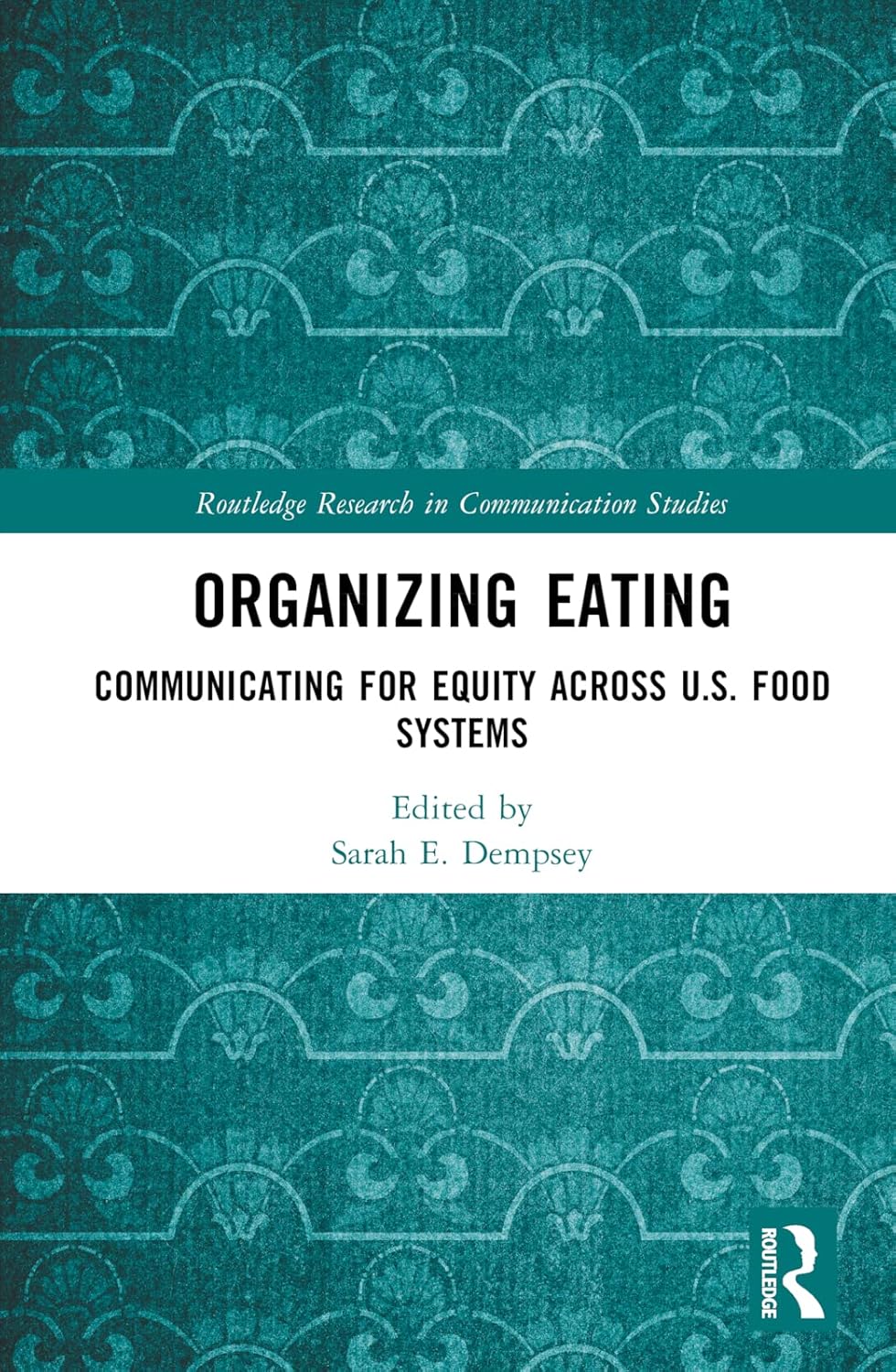
The collection starts by revealing how U.S. policy racializes and individualizes hunger. In early chapters, Adam Pine, Rebecca de Souza, and Kathleen Hunt’s research successfully reveals that the “invisible hand of white supremacy” (pp. 58–59) has manipulated U.S. food policy. For instance, the authors explain that mainstream mechanisms to access food, like SNAP or grocery stores, actively reinforce a system that allocates resources through racist means. . . . This enables white people to control BIPOC communities’ experience with food. . . . The subsequent chapters explore the importance of communication infrastructure. Organization and communication infrastructure are interrelated and have historically worked to further marginalize vulnerable communities; however, as these authors argue, it does not have to be that way. . . .
Read the entire book review, for free, at JAFSCD. |
|
|
JAFSCD SHAREHOLDER'S EVENT |
|
|
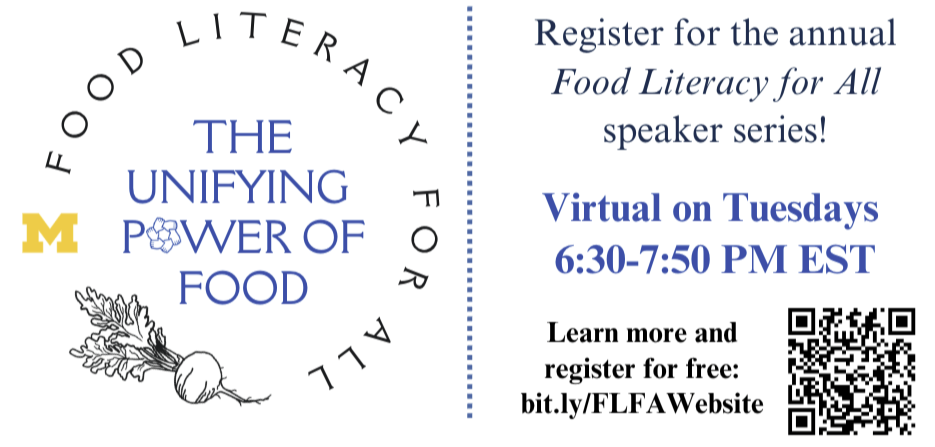
Food Literacy for All is a community-academic partnership course at the University of Michigan, now in its 10th year.
From January to April, Food Literacy for All features a dynamic session each Tuesday evening (6:30-7:50 pm ET) that addresses the challenges and opportunities of diverse food systems. All sessions are on Zoom and recordings are shared afterward. Upcoming sessions include: - March 10: Panel of Urban Agriculture Directors, including Patrice Brown (associate director of urban agriculture, City of Detroit) and Rabekha Siebert (comprehensive urban agriculture plan manager, the City of Dallas)
-
March 17: The Foundation of Food: The Science and Politics of Our Changing Soils, with Dr. Asmeret Asefaw Berhe (Director of the Sierra Nevada Research Institute and Climate Institute; University of California, Merced)
See the schedule and register for free as a community member on the website. Registration is rolling, so you can sign up anytime. As a registrant, you can attend the sessions that interest you. Register once and received reminders of each week's webinar. |
|
|
This email is sent to you as a notification of the newest JAFSCD articles and other occasional JAFSCD news. |
|
JAFSCD is an open access, community-supported journal! Your library, program, or organization can become a shareholder to help keep JAFSCD's content available to all, regardless of their resources. We welcome anyone to become an individual shareholder; donations are tax-deductible to the extent allowed by law.
|
|
| |