from the Journal of Agriculture, Food Systems, and Community Development |
|
|
JAFSCD is the world’s only community-supported journal. JAFSCD content is open access (free) thanks to the generous support of our shareholders: the JAFSCD Shareholder Consortium, Library Shareholders, a growing number of Individual Shareholders, and our JAFSCD Partners: |
|
|
JAFSCD peer-reviewed article by Chyi-lyi (Kathleen) Liang (Center for Environmental Farming Systems, North Carolina Agricultural and Technical State U), and Bryan Collins (State U of New York at Oneonta)
Recent price volatility associated with poultry meat and eggs has triggered much discussion regarding the poultry industry and food safety policies. Like in various types of meat production, antibiotics used to sustain animals’ health have been a controversial and mysterious subject for consumers. Some scholars have attempted to clarify responsible antibiotic applications, restricted antibiotic applications, and antibiotic-free operations. Beyond the antibiotic questions, consumers also wonder (if they notice) about all the terms, such as antibiotic-free, free range, organic, non-GMO, and humanely raised, on poultry packaging. There is limited research-based information to explore how consumers perceive poultry meat attributes labeled in various commercial packages.
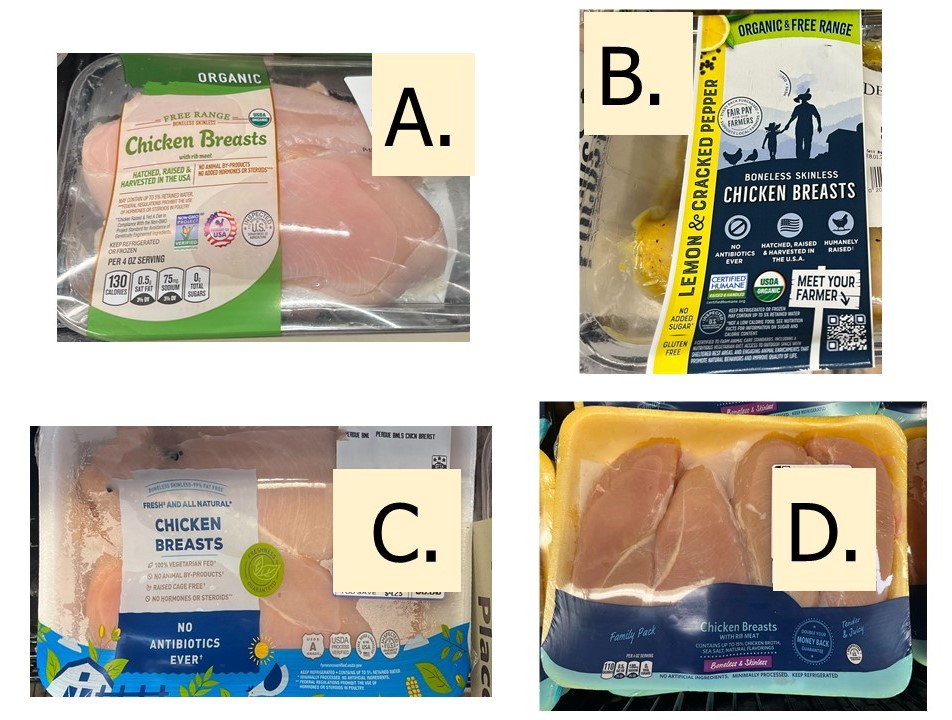
In a new JAFSCD article, Using a screening survey to understand the appeal of poultry meat label attributes to support small-scale producers, authors Liang and Collins present findings from a screening survey to explore consumers’ perceptions of specific characteristics on the package via convenience samples. We identified attributes based on a literature review and real-time market observations from grocery stores. Results showed diverse responses from 362 participants regarding the types, colors, designs, and labels on fresh, raw chicken breast packages that could be found in grocery stores. The preferences of different attributes were further analyzed using factor analysis and clustered into similar groups of choices based on gender, age, and location of purchase.
Corresponding author Kathleen Liang can be contacted at cliang@ncat.edu. KEY FINDINGS -
Finding 1: Survey respondents revealed preferences of certain traits on package labels such as USDA organic, free range, raised and harvested in the USA. The insights can help guide decisions about which product attributes carry the most consumer appeal, particularly among values-driven and health-conscious audiences.
-
Finding 2: Additional label characteristics such as certified humane, no hormones or steroids, non-GMO, and antibiotic-free were identified by survey respondents. Organic is the most attractive attribute to the majority of respondents. Free range and raised and harvested in the USA were the second and third most listed attributes. Respondents seem to have undecided assessments for antibiotic-free characteristics.
-
Finding 3: Four factors were created, showing natural components that consumers appeared to group the attributes they value into. Factor 1 refers to consumer preference for attributes that make use of “negative labeling” (no animal by product, no hormone or steroids, non-GMO), while Factor 2 refers to consumer preference for “positive labeling” (organic, free range, raised and harvested in the USA, and humanely raised). Factor 3 was a unique factor that mostly accounted for antibiotic-free preference, suggesting that consumers seeking antibiotic-free products seek this product in isolation, or not in conjunction with other common attributes. Factor 4 strongly correlated with a heightened valuation of the color and design of the packaging.
RECOMMENDATIONS FOR POLICY, PRACTICE, AND RESEARCH
The results can assist community organizations and service providers such as small local food cooperatives, independent grocery stores with a local niche, and Cooperative Extension educators and agents to support local producers in engaging in creative marketing strategies to improve consumers’ awareness, food safety education, and recognition of differences across words used in different types of labels. SHARE ON YOUR SOCIALS
A new article explores consumers’ preferences among characteristics listed on poultry packages that might incentivize local producers to promote various attributes of poultry meat at the retail level. Read the full article @JAFSCD for free: https://doi.org/10.5304/jafscd.2026.152.006
|
|
|
Photo above: Figure 1 from the article of images of poultry packaging used in the screening survey. |
|
|
From the review:
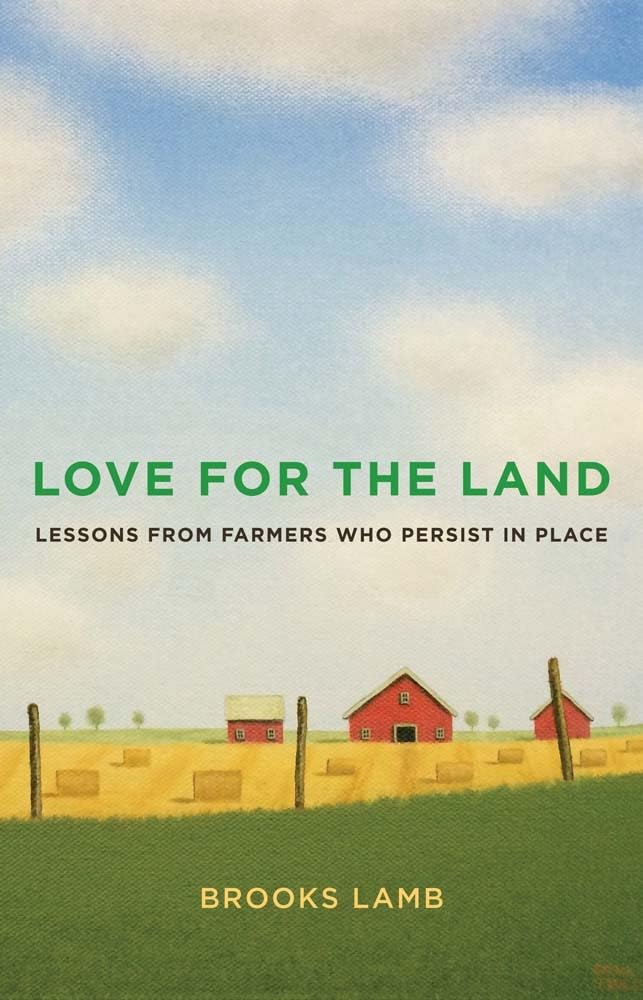
As a boy who grew up on Tennessee farmland and returned to document the stories of those who stayed, Brooks Lamb offers a moving tribute to agricultural resilience. In this review of Love for the Land: Lessons from Farmers Who Persist, I reflect on the importance of these stories and the enduring wisdom they carry. Lamb sets out to preserve the voices of small-scale farmers to reframe persistence as a form of resistance. His goal is not simply to document survival, but to illuminate the emotional, ethical, and imaginative commitments that sustain farmers in the face of erasure. . . .
Read the entire book review, for free, at JAFSCD. |
|
|
|
Right-to-farm laws: Legal shields of Big Ag
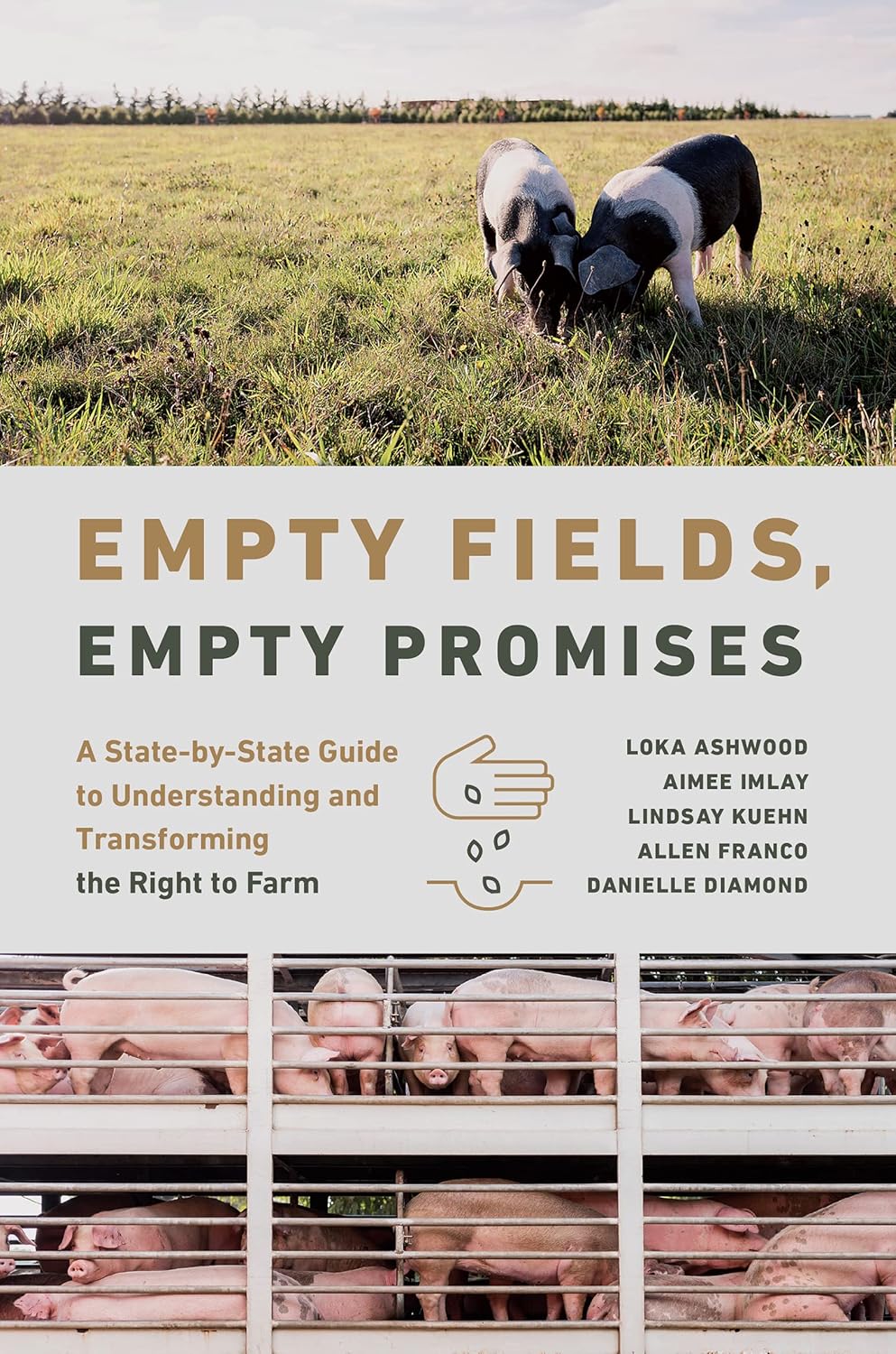
Review of Empty Fields, Empty Promises: A State-by-State Guide to Understanding and Transforming the Right to Farm, by Loka Ashwood, Aimee Imlay, Lindsay Kuehn, Allen Franco, and Danielle Diamond
Review by Roland Ebel (Montana State U) |
|
|
From the review:
In the 1970s and 1980s, U.S. agriculture faced its worst crisis since the Great Depression. Dire finances due to collapsed land and commodity prices forced almost a third of farms nationwide to close, negatively affecting rural economies beyond farming (Barnett, 2000). During this period, right-to-farm (RTF) state laws were enacted to protect farmers from nuisance lawsuits resulting from agricultural practices, such as complaints about noise or odor. These laws were promoted to safeguard family farms and slow down the urbanization of rural areas, a trend contributing to the emergence of post-agrarian rural societies in the U.S. In Empty Fields, Empty Promises, authors Ashwood, Imlay, Kuehn, Franco, and Diamond critically examine how far RTF laws have diverged from their original intent and now instead protect large-scale operations, such as concentrated animal feeding operations (CAFOs). . . .
Read the entire book review, for free, at JAFSCD. |
|
|
JAFSCD SHAREHOLDER'S EVENT |
|
|
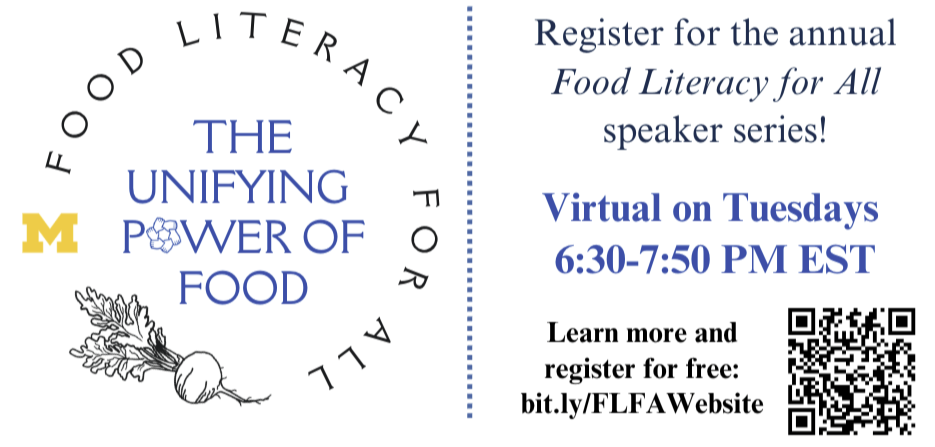
Food Literacy for All is a community-academic partnership course at the University of Michigan, now in its 10th year.
From January to April, Food Literacy for All features a dynamic session each Tuesday evening (6:30-7:50 pm ET) that addresses the challenges and opportunities of diverse food systems. All sessions are on Zoom and recordings are shared afterward. Upcoming sessions include: - February 24: Anthony Flaccavento (executive director of Rural Urban Bridge Initiative)
- March 10: Panel of Urban Agriculture Directors, including Patrice Brown (associate director of urban agriculture, City of Detroit) and Rabekha Siebert (comprehensive urban agriculture plan manager, the City of Dallas)
See the schedule and register for free as a community member on the website. Registration is rolling, so you can sign up anytime. As a registrant, you can attend the sessions that interest you. Register once and received reminders of each week's webinar. |
|
|
This email is sent to you as a notification of the newest JAFSCD articles and other occasional JAFSCD news. |
|
JAFSCD is an open access, community-supported journal! Your library, program, or organization can become a shareholder to help keep JAFSCD's content available to all, regardless of their resources. We welcome anyone to become an individual shareholder; donations are tax-deductible to the extent allowed by law.
|
|
|
|