from the Journal of Agriculture, Food Systems, and Community Development |
|
|
JAFSCD is the world’s only community-supported journal. JAFSCD content is open access (free) thanks to the generous support of our shareholders: the JAFSCD Shareholder Consortium, Library Shareholders, a growing number of Individual Shareholders, and our JAFSCD Partners: |
|
|
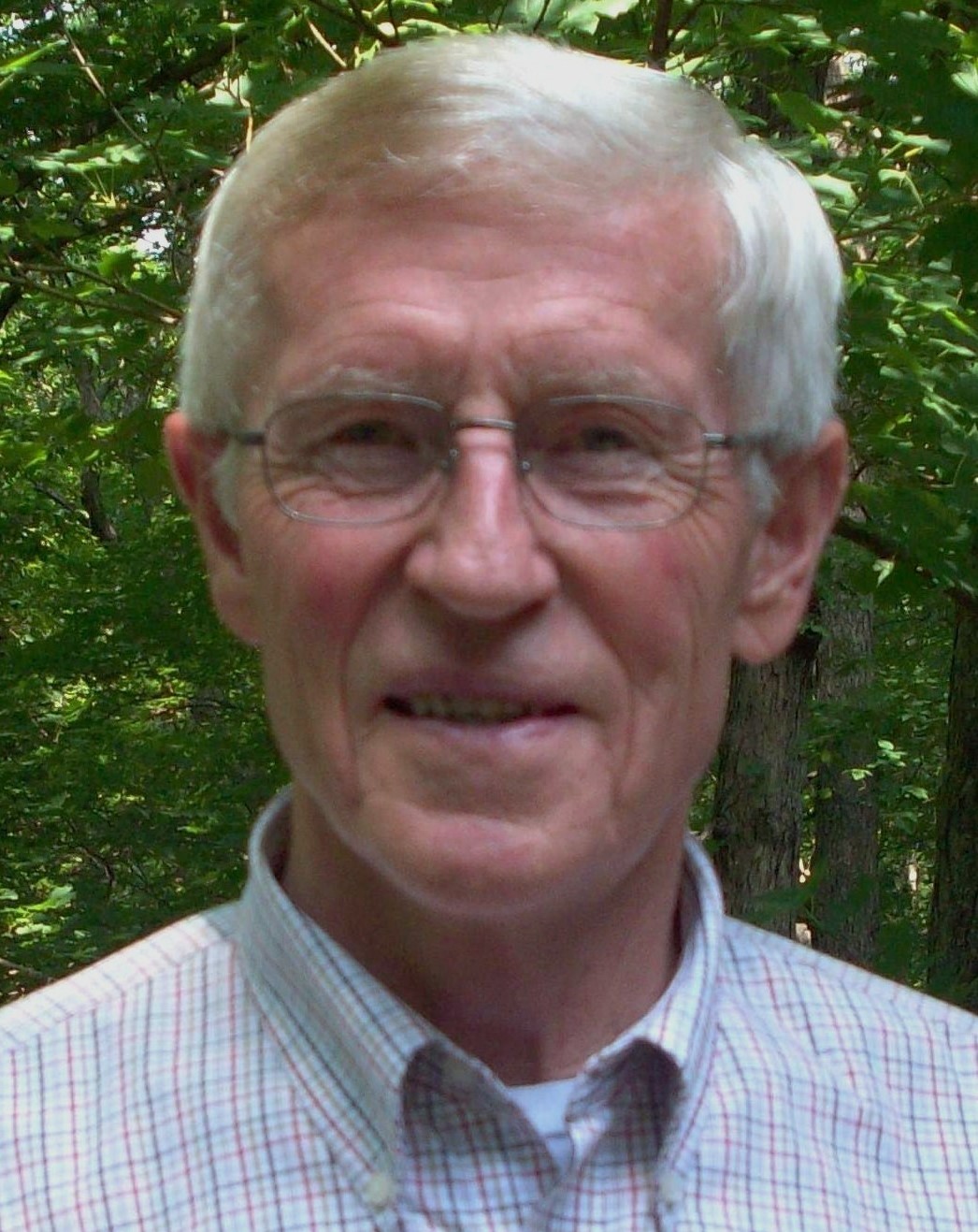
From John Ikerd's latest column in the current spring issue:
"In my two previous Economic Pamphleteer columns, . . . I argued that U.S. farm policies should focus on long-run domestic food security, and that land use and production for exports or biofuels should be regulated as industrial, not agricultural. This column advocates policy changes to ensure that everyone has access not only to enough food but also to “good food,” defined as wholesome, nutritious, culturally appropriate, and sustainably produced food. . . . The Good Food Movement is a logical response to the failure of government farm and food policies to prioritize public over corporate interests. . . . [Furthermore,] good food policies must prioritize those who produce, distribute, and consume food over economic efficiency driven by a quest for profitability."
Read the entire column in JAFSCD: https://doi.org/10.5304/jafscd.2026.152.001 |
|
|
JAFSCD peer-reviewed article by Jacob A. Miller-Klugesherz (Kansas State University)
Cover crops are often celebrated as a cornerstone of regenerative agriculture—but what happens when their use deepens farmers’ reliance on chemical herbicides for suppression/termination?
In a new JAFSCD article, Cover crops, chemicals, and emissions in Pottawatomie County, Kansas, USA, researcher Jacob A. Miller-Klugesherz analyzed interviews with 22 farmers and/or cover crop experts in the county. By connecting farmer perspectives on cover crops with county-level trends in crop types, land use, and emissions, Jacob investigated why farmers in the county adopted cover crops at nearly twice the national rate, what interviewees were looking for in cover crops, and the predominance of chemical herbicide suppression/termination driven by the chemical herbicide treadmill.
The author can be contacted at tree11@ksu.edu. KEY FINDINGS
Farmers valued cover crops for affordable forage and soil retention and improvement. Cover crop adoption depended on the timing of weather and labor availability and affordability. Farmers said they would plant more cover crops if they received cost-share subsidies (~US$50 per acre).
When grazing or mechanical suppression was not possible, nearly all interviewees relied on herbicide termination, reinforced by the chemical herbicide treadmill.
Herbicide rates on PT cropland acres more than doubled from 1997 to 2017, chemical expenses per operations more than tripled from 1997 to 2022, and all four emission types increased from 2005 to 2019 (%Δ range 53–371). These trends corresponded with a shift in the predominant cropland types, from hay(lage) to corn and soybeans. Farmers balanced stewardship values with “feed the world” narratives (based in the care/harm moral foundation) to justify their chemical herbicide dependence for cover crop suppression/termination.
RECOMMENDATIONS FOR POLICY, PRACTICE, AND RESEARCH - Adopt soil health principles that trend more organic than regenerative and allow for minimum tillage (<6”), not just no-till.
- Expand education and outreach on herbicide-free cover crop suppression methods such as roller-crimping or grazing.
-
Strengthen community-based learning networks that support peer-to-peer knowledge exchange.
- Reintroduce H.R.8527 (2023), which would extend the U.S. Department of Agriculture, Risk Management Agency (USDA RMA)'s 2022 Pandemic Cover Crop Program by providing a US$5/acre crop insurance discount.
-
Tailor cost-share and incentive programs to reward reductions in chemical inputs, not just cover crop acreage.
SHARE ON YOUR SOCIALS
How and why have farmers used cover crops as a moral cover for over dependence on chemical herbicides for suppression/termination? A new @JAFSCD study by Jacob Miller-Klugesherz found that farmers in Pottawatomie County (Kansas) have increasingly planted cover crops — yet they face a spray or spade dichotomous choice for cover crop suppression/termination, and they defaulted to spray. At certain times during 1997–2022, the county experienced doubled herbicide application rates on cropland, tripled chemical herbicide costs, and increased greenhouse gas emissions — revealing how structural pressures sustain herbicide dependence in conservation and regenerative practices. Read the full @JAFSCD article for free: https://doi.org/10.5304/jafscd.2026.152.002
|
|
|
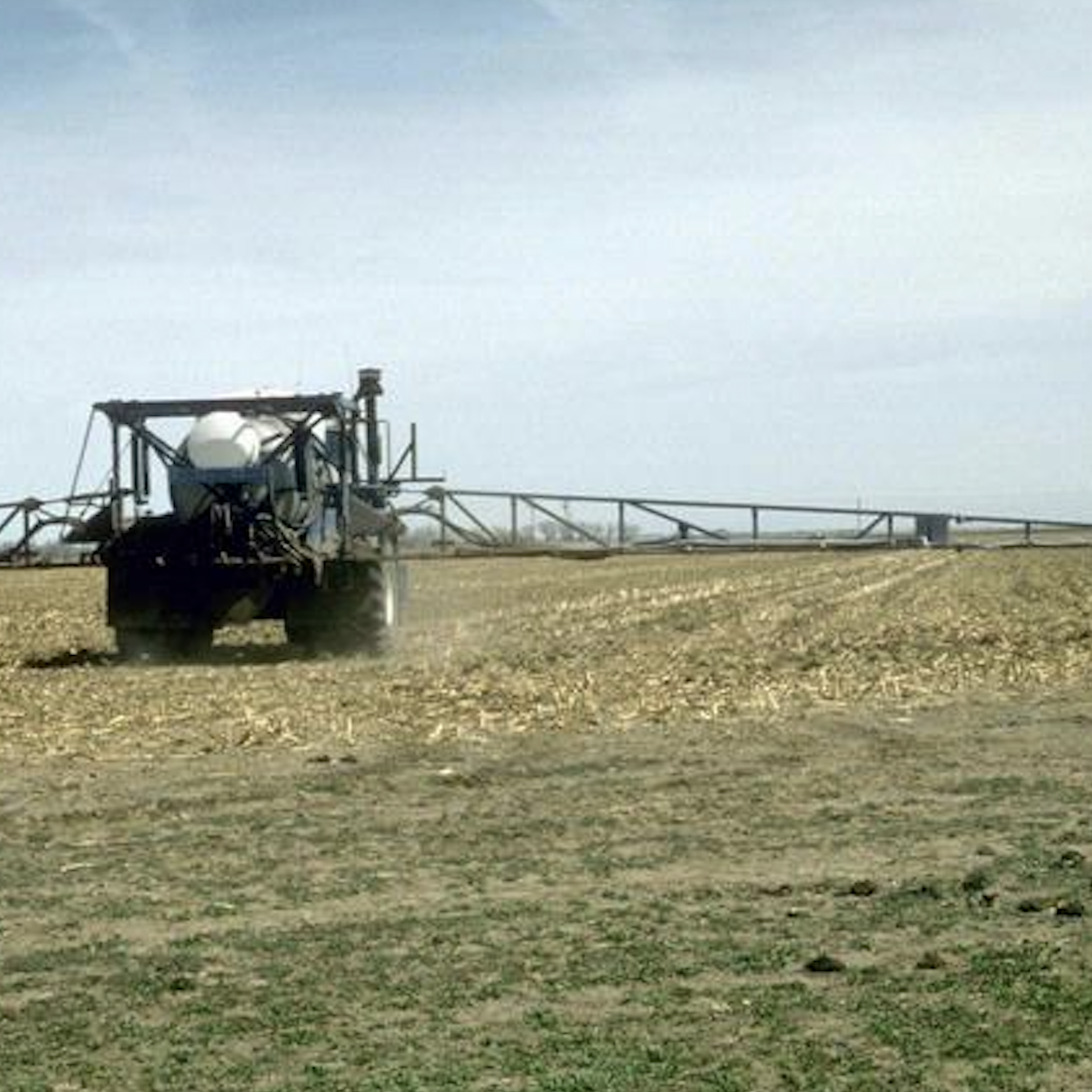
Photo above: Herbicide application to suppress ground cover in a corn cropping system. Image by H.F. Schwartz, 2008; used under CC-BY-3.0. |
|
|
JAFSCD SHAREHOLDER'S EVENT |
|
|
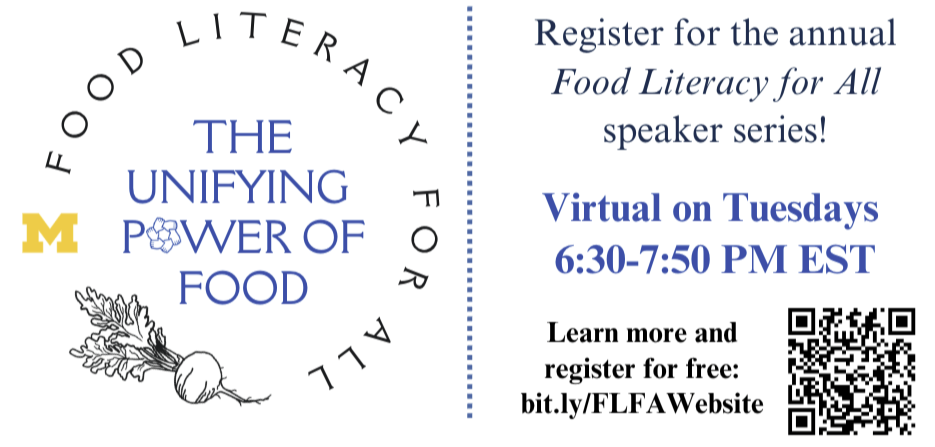
The 10th anniversary series of Food Literacy for All kicks off on January 13, with guest speakers starting on January 20. Food Literacy for All is a community-academic partnership course at the University of Michigan.
From January to April, Food Literacy for All features dynamic sessions each Tuesday evening (6:30-7:50 pm ET) that address the challenges and opportunities of diverse food systems.
The first session on Jan. 13 gives an overview of food systems and reviews the syllabus and assignments (community members don’t need to attend the whole session). The guest speakers start on January 20. All sessions are on Zoom and recordings are shared afterward.
See the schedule and register for free as a community member on the website. Registration is rolling, so you can sign up anytime. As a registrant, you can attend the sessions that interest you. You register once and will get reminders of each week's webinar. |
|
|
This email is sent to you as a notification of the newest JAFSCD articles and other occasional JAFSCD news. |
|
JAFSCD is an open access, community-supported journal! Your library, program, or organization can become a shareholder to help keep JAFSCD's content available to all, regardless of their resources. We welcome anyone to become an individual shareholder; donations are tax-deductible to the extent allowed by law.
|
|
|
|