from the Journal of Agriculture, Food Systems, and Community Development |
|
|
JAFSCD is the world’s only community-supported journal. JAFSCD content is open access (free) thanks to the generous support of our shareholders: the JAFSCD Shareholder Consortium, Library Shareholders, a growing number of Individual Shareholders, and our JAFSCD Partners: |
|
|
JAFSCD peer-reviewed article by Ana B. Vivas, Vasileios Chatzimpyros (University of York Europe Campus; and South East European Research Center), Christos Stergiadis (University of York), Burcu Borhan Türeli (Sabancı University), Andrei Holman, Simona Popusoi (Alexandru Ioan Cuza University) and Carolin Zorell (Örebro University)
Grassroots communities and citizen collectives have emerged as a bottom-up response to take the lead and address social inequalities and environmental sustainability challenges. The researchers found that participation in bottom-up initiatives (BUIs) that are already happening in the ground in five countries was associated with change in consumption and values associated with healthier and more sustainable food choices in people self-identified as being socially vulnerable. At the same time, these initiatives played a key role in creating resilient communities and a sense of solidarity and collective unity.
In a new JAFSCD article, The potential of bottom-up initiatives to produce a just transformation towards sustainable food consumption, authors Ana B. Vivas, Vasileios Chatzimpyros, Christos Stergiadis, Burcu Borhan Türeli, Andrei Holman, Simona Popusoi, & Carolin Zorell present findings from a real-life quasi-experimental study, in the context of the European project ACCTING, that aimed to investigate — and make visible — bottom-up initiatives in Belgium, Germany, Greece, Romania, and Türkiye, and their potential to create a just transformation in the current globalized food system.
Corresponding author Ana B. Vivas can be contacted at vivas@york.citycollege.eu. KEY FINDINGS
Participants in the studied bottom-up initiatives reported an increase in the importance attributed to animal welfare and health when choosing food, and in the frequency of consumption of plant-based and seasonal food three months after participating in the BUI.
Community building under a common cause and increasing knowledge and skills on sustainable food are potential mechanisms of change. - Vulnerability factors, such as income and age, were associated with barriers to change, whereas women should be considered as important drivers of change for sustainable food consumption.
RECOMMENDATIONS FOR POLICY, PRACTICE, AND RESEARCH
BUIs demonstrate potential for creating change; however, their scalability and impact may be limited by their lack of resources. Further studies should examine effective models and frameworks for BUIs’ efforts to produce long-lasting and system-level changes without compromising their deep community engagement.
An important direction for policy is to empower and sustain grassroots initiatives that are already happening in the ground, such as by facilitating mentorship and targeting financial support for women leading food-related BUIs, and for those that are focused on socially vulnerable groups.
To overcome vulnerability-related barriers to access, there is a need for top-down policies and processes to strengthen affordability of sustainable and healthy foods.
SHARE ON YOUR SOCIALS
Are grassroots communities and citizen collectives the solution to produce a just transformation in the current globalized food system? Read the full @JAFSCD article for free: https://doi.org/10.5304/jafscd.2025.151.020 |
|
|
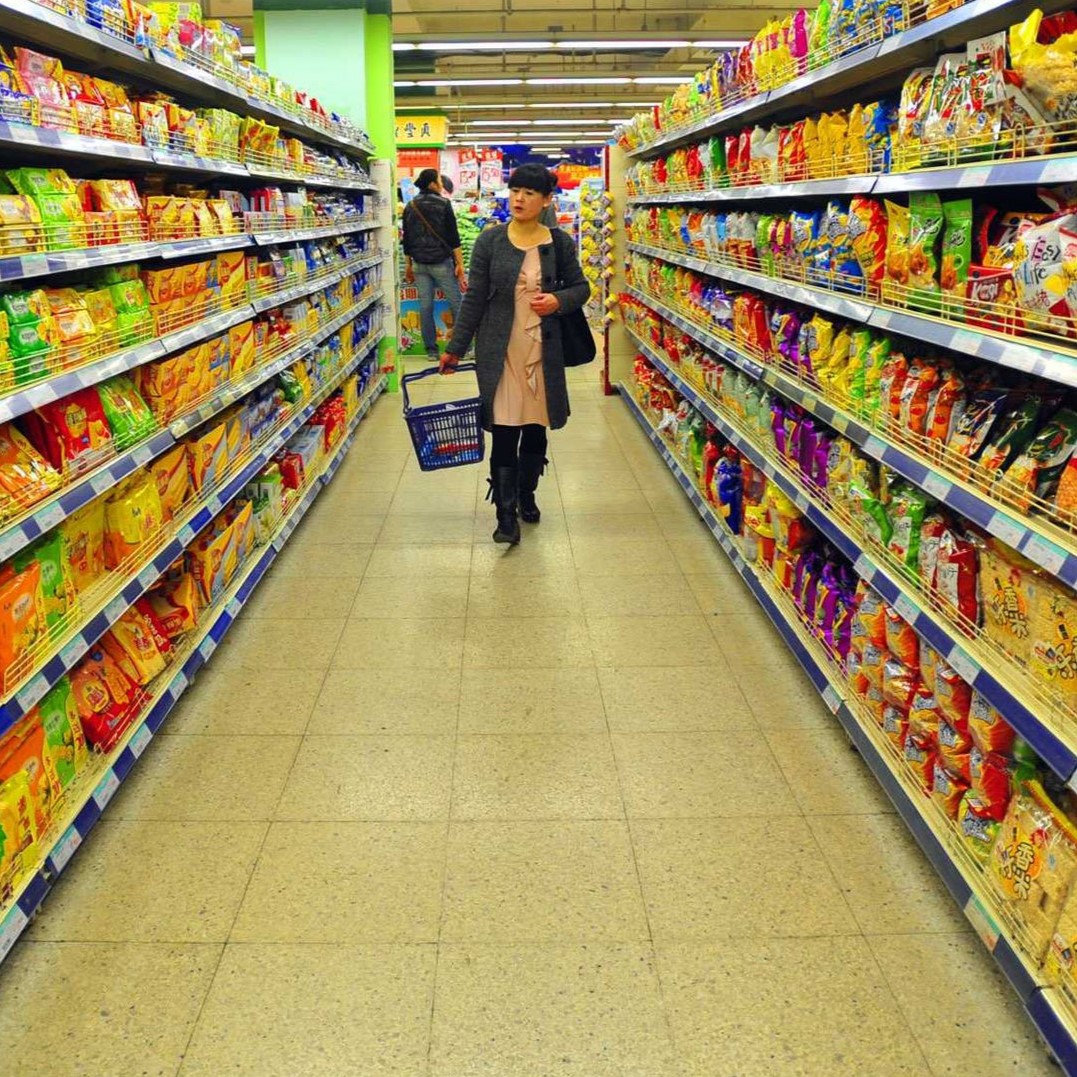
Photo above: Snacks and more snacks in the supermarket. Photo by Eclectic Jack on Flickr. |
|
|
JAFSCD SHAREHOLDER'S EVENT |
|
|
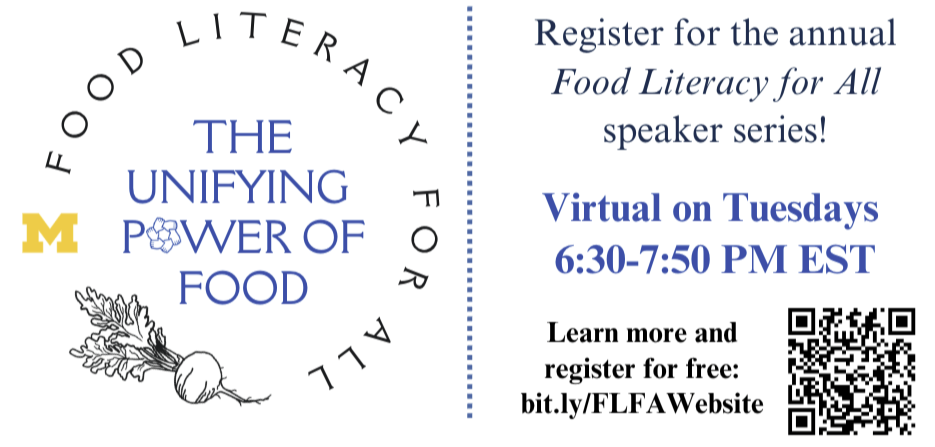
The 10th anniversary series of Food Literacy for All kicks off on January 13, with guest speakers starting on Jan. 20. Food Literacy for All is a community-academic partnership course at the University of Michigan.
From January to April, Food Literacy for All features dynamic sessions each Tuesday evening (6:30-7:50 pm ET) that address the challenges and opportunities of diverse food systems.
The first session on Jan. 13 gives an overview of food systems and reviews the syllabus and assignments (community members don’t need to attend the whole session). The guest speakers start on January 20. All sessions are on Zoom and recordings are shared afterward.
See the schedule and register for free as a community member on the website. Registration is rolling, so you can sign up anytime. As a registrant, you can attend the sessions that interest you. You register once and will get reminders of each week's webinar. |
|
|
NATIONAL FARM STOP NETWORK |
|
|
| Contribute to the first-ever
National Farm Stop Census
The National Farm Stop Network is conducting the first ever National Farm Stop Census to understand how this growing model of producer-focused retail is taking root across the U.S. |
|
|
What is a Farm Stop? - Mission-based, year-round grocery store
- Sources directly from local producers
-
Provides high returns to producers, often through consignment
- Serves as a community gathering place
Your Help Is Needed! If you operate a farm stop that’s been in operation for at least a year, we invite you to participate by taking a 15-minute survey. |
Your input will contribute to the first nationwide, comprehensive dataset on farm stops, offering a proof of concept that strengthens funding opportunities, technical assistance, and policy support for businesses like yours! Questions or concerns? Reach out to katbarr@umich.edu |
|
|
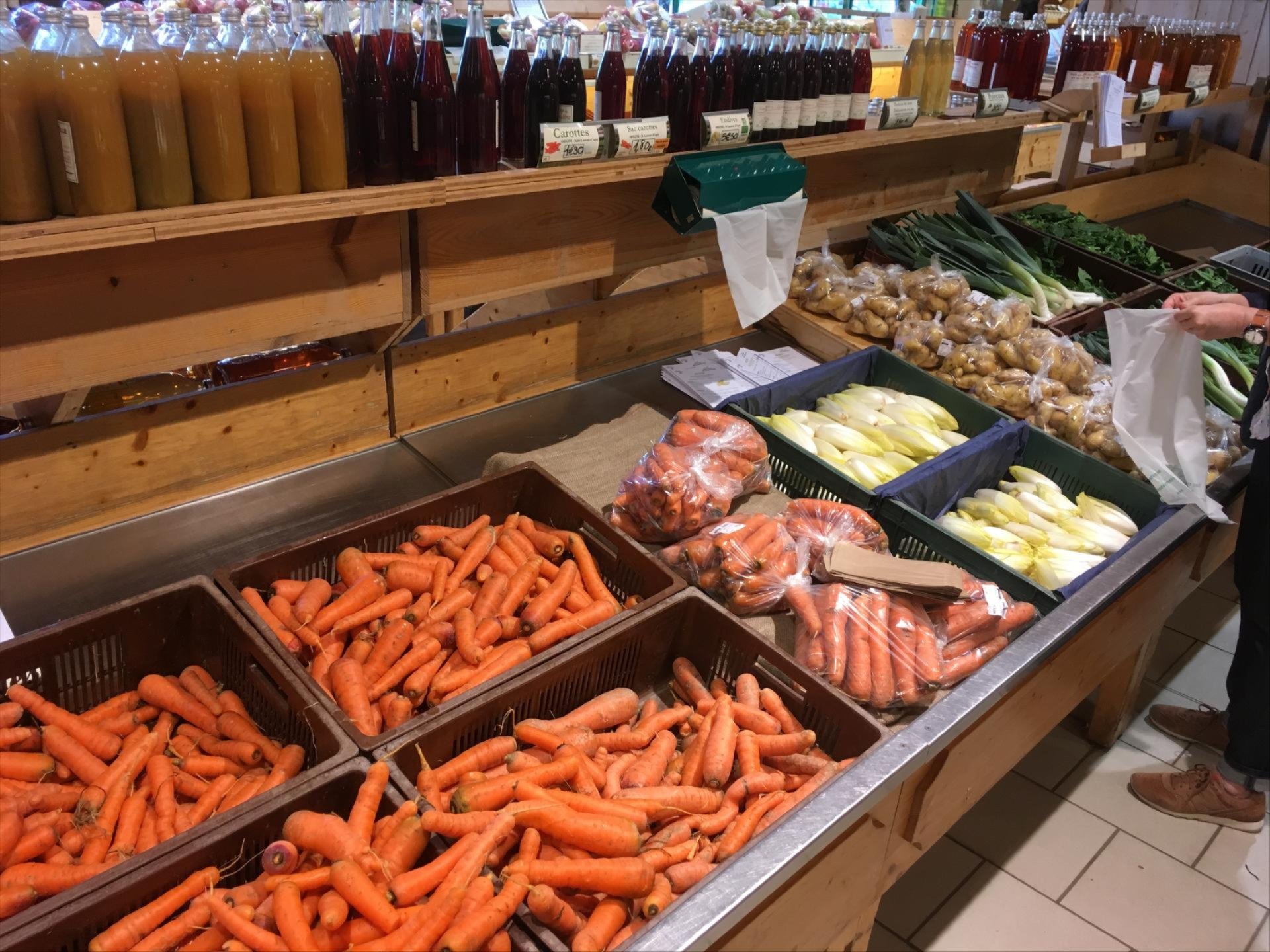
Photo above: The Uniferme store near Lyon, France, is a cooperative effort of local farmers who staff the store during open hours. Products range from mushrooms to cheese, vegetables, and wine; photo © 2019 by Amy Christian. |
|
|
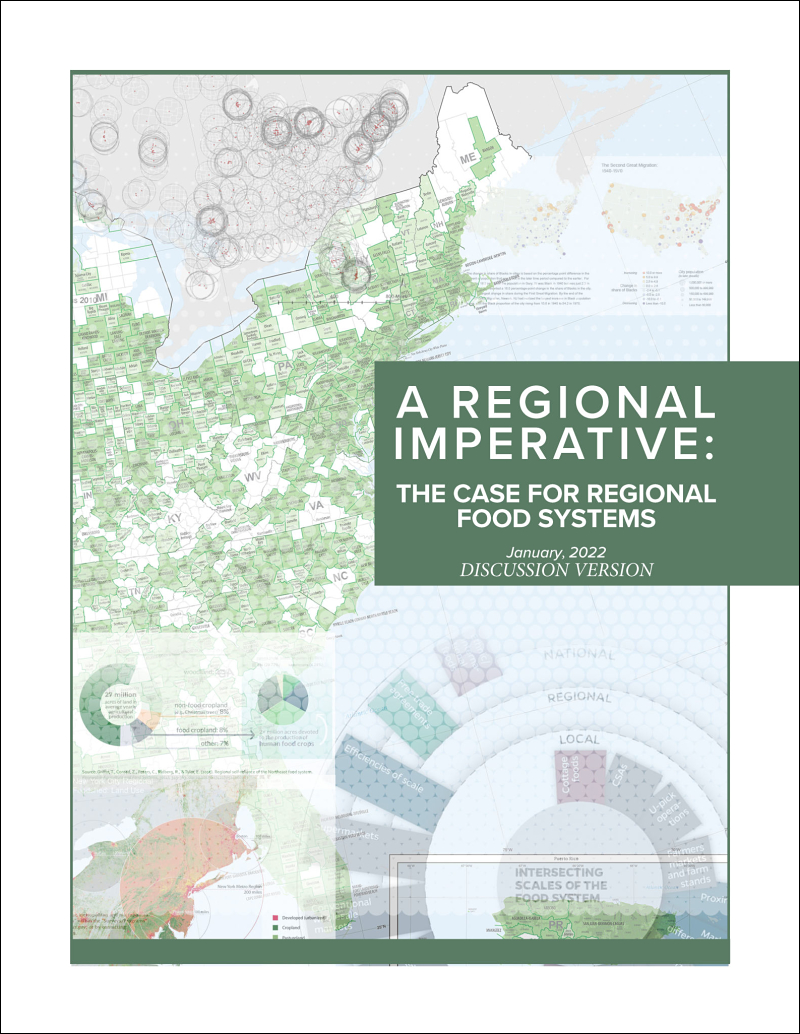
| A Regional Imperative: The Case for Regional Food Systems
In this foundational text published in 2023, authors Kathryn Z. Ruhf and Kate Clancy take a comprehensive look at regional food systems and make a compelling case for why they are both possible and desirable. |
|
|
This forward-looking final report explores the concepts, practices, challenges, and promise of regional food systems. Ruhf and Clancy make the case for “thinking regionally,” drawing examples from the Northeast and across the U.S. Eight chapters take a wide perspective on the dimensions and attributes of regional food systems.
The report posits 6 dimensions and 12 attributes of regional food systems, with resilience, diversity, and sustainability as overarching themes. Topics include production, food security, economic development, land access and natural resources, climate change, supply-chain infrastructure, and social justice.
The authors explore the challenges to and constraints of developing regional food systems, and suggest what is needed to advance them. It makes an important contribution to the collective search for food system governance, self-reliance, resilience, and justice.
Read or download the report for free: https://doi.org/10.5304/lyson.2022.001 |
|
| |
As a community-supported journal, JAFSCD depends on our community of shareholders, who contribute to keep our content free and freely accessible, worldwide. We appreciate all our new and renewing shareholders! Learn more about joining here. Our newest JAFSCD Library Shareholder:
West Chester University |
|
|
SUPPORT JAFSCD THROUGH YOUR LIBRARY! | |
|
|
If you are affiliated with a college or university and want to support JAFSCD, now is the time of year when libraries order new journal subscriptions. |
|
|
How do I know if my library already contributes? Check the list here (scroll down on the page).
Isn't JAFSCD open access and free? It is! But we are a community-supported journal. Libraries contribute to become JAFSCD Library Shareholders instead of buying a subscription — keeping JAFSCD free to all instead of buying access just for their faculty and students. Think of us as the CSA of journals!
Considering submitting a manuscript to JAFSCD? If your institution is a JAFSCD Shareholder, you benefit by having our US$750 APC waived automatically.
How do I recommend JAFSCD to my library? Tell your librarian why JAFSCD is important to your work, and send them this link to learn more!
Contact Amy Christian, managing editor, for details or assistance. |
|
|
This email is sent to you as a notification of the newest JAFSCD articles and other occasional JAFSCD news. |
|
JAFSCD is an open access, community-supported journal! Your library, program, or organization can become a shareholder to help keep JAFSCD's content available to all, regardless of their resources. We welcome anyone to become an individual shareholder; donations are tax-deductible to the extent allowed by law.
|
|
|
|