from the Journal of Agriculture, Food Systems, and Community Development |
|
|
JAFSCD is the world’s only community-supported journal. JAFSCD content is open access (free) thanks to the generous support of our shareholders: the JAFSCD Shareholder Consortium, Library Shareholders, a growing number of Individual Shareholders, and our JAFSCD Partners: |
|
|
|
Seeds of change: Ghana's Planting for Food and Jobs (PFJ) strengthens rural food security—but requires stronger policy support JAFSCD peer-reviewed article by Imrana Bambila Ibrahim (China Agricultural U [CAU]) |
|
|
A recent study reveals that Ghana’s flagship Planting for Food and Jobs (PFJ) initiative has helped enhance food crop production and strengthen household security for many beneficiary smallholder households; however, it calls for a broader policy integration to sustain these gains.
Agricultural policy interventions remain central to addressing persistent food insecurity in sub-Saharan Africa. In Ghana, the government’s Planting for Food and Jobs (PFJ) initiative, launched in 2017, aimed to enhance smallholder productivity, create employment, and stabilize food systems through input subsidies and market linkages. Yet questions remain about how effectively the program translates into improved household food security achievement among rural farmers. This is particularly the case in the Karaga district of northern Ghana, where vulnerability to multidimensional poverty and economic shocks is significant.
In a newly published article, The contribution of Ghana's Planting for Food and Jobs (PFJ) intervention to rural household food security achievement: Case study of Karaga District, author Imrana Bambila Ibrahim of the College of International Development and Global Agriculture (CIDGA), China Agricultural University, examines how PFJ has contributed to achieving the food security of rural households among smallholder farmers in the Karaga District of Northern Ghana. This study employs a qualitative research approach complemented by policy perspectives from key informants to explore the lived experiences and challenges faced by farmers. It also discusses the policy implications of the PFJ initiative for the development of sustainable food systems.
Corresponding author Imrana Bambila Ibrahim can be contacted at iibambila@gmail.com. KEY FINDINGS
Improved crop productivity and food availability: Beneficiary farmers under the PFJ program reported increased access to quality seeds and fertilizers, resulting in higher yields of food crops and more stable household food supplies.
Enhanced livelihoods and job creation: The program indirectly generated additional income opportunities through input supply chains, on-farm labor demand, and supplementing off-farm engagements, thereby supporting rural households’ earnings and reducing seasonal food shortages. - Policy coherence: Despite gains in productivity, farmers continue to face market inefficiencies, late input delivery, inadequate post-harvest infrastructure, and weak governance, all of which limit sustained income growth and farmers’ ability to achieve self-reliance.
RECOMMENDATIONS FOR POLICY, PRACTICE, AND RESEARCH -
Improve governance and input delivery systems: The study emphasizes that PFJ’s effectiveness and similar future initiatives depend on integrating it into a broader framework that strengthens governance, supports gender equity, and enhances resilience to climate and market shocks.
- Integrate PFJ into a broader rural development framework: PFJ and future agricultural policies should be embedded within holistic strategies that strengthen value chains, promote agro-processing, and expand access to reliable markets for smallholder farmers.
-
Further research is needed to assess the sustainable contributions of PFJ to rural development and household food security across other beneficiary communities in Ghana, using comparative outcomes and longitudinal, mixed-method studies.
SHARE ON YOUR SOCIALS How can national agricultural policies strengthen household food security?
A new @JAFSCD study reveals how Ghana’s Planting for Food and Jobs (PFJ) program enhances rural farmers’ crop productivity and resilience to food insecurity—while also highlighting gaps in sustainability and policy coherence. Read the full @JAFSCD article for free: https://doi.org/10.5304/jafscd.2025.151.017
|
|
|
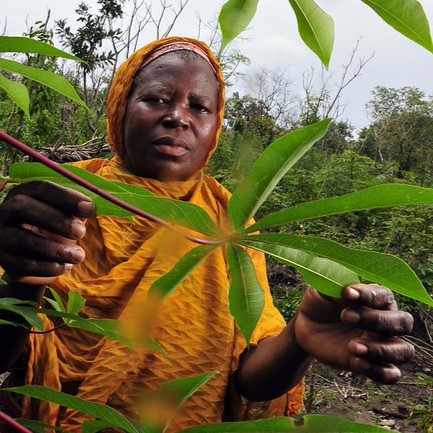
Photo above: A cassava farmer in Ghana's Northern Region. Photo courtesy of the Alliance of Bioversity International and CIAT, licensed as CC BY-NC-SA 2.0, via Flickr. |
|
|
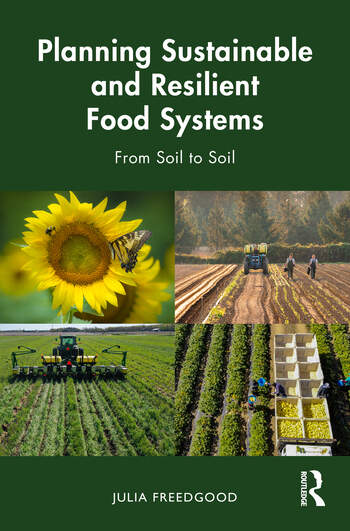
From the review:
An expert in food systems planning and agriculture advocate, Freedgood is an advisor at American Farmland Trust who focuses on planning and policy to increase food security and combat climate change with a farmers first approach. In her book, she provides a rich assessment, particularly in the wake of the COVID-19 pandemic, of the need to plan for a more resilient food system through land management, supply chains, policy, and community. . . .
Read the entire book review for free at JAFSCD: https://doi.org/10.5304/jafscd.2025.151.019 |
|
|
SUPPORT JAFSCD THROUGH YOUR LIBRARY! |
|
|
|
If you are affiliated with a college or university and want to support JAFSCD, now is the time of year when libraries order new journal subscriptions. |
|
|
How do I know if my library already contributes? Check the list here (scroll down on the page).
Isn't JAFSCD open access and free? It is! But we are a community-supported journal. Libraries contribute to become JAFSCD Library Shareholders instead of buying a subscription — keeping JAFSCD free to all instead of buying access just for their faculty and students. Think of us as the CSA of journals!
Considering submitting a manuscript to JAFSCD? If your institution is a JAFSCD Shareholder, you benefit by having our US$750 APC waived automatically.
How do I recommend JAFSCD to my library? Tell your librarian why JAFSCD is important to your work, and send them this link to learn more!
Contact Amy Christian, managing editor, for details or assistance. |
|
|
This email is sent to you as a notification of the newest JAFSCD articles and other occasional JAFSCD news. |
|
JAFSCD is an open access, community-supported journal! Your library, program, or organization can become a shareholder to help keep JAFSCD's content available to all, regardless of their resources. We welcome anyone to become an individual shareholder; donations are tax-deductible to the extent allowed by law.
|
|
|
|