from the Journal of Agriculture, Food Systems, and Community Development |
|
|
JAFSCD is the world’s only community-supported journal. JAFSCD content is open access (free) thanks to the generous support of our shareholders: the JAFSCD Shareholder Consortium, Library Shareholders, a growing number of Individual Shareholders, and our JAFSCD Partners: |
|
|
| Roots of Resilience: Reclaiming food sovereignty for the Orang Asli
JAFSCD peer-reviewed article by Rachel Thomas Tharmabalan (U of Wisconsin Green Bay) |
|
|
The Orang Asli, the indigenous people of Malaysia, have long acted as the guardians of the land, yet they currently face critical environmental, sociocultural, and nutritional challenges. In the article Empowering Orang Asli communities through an integrative approach to sustainable food sovereignty, the researcher proposes a path forward: a Sustainable Food Sovereignty Model designed to put the power back into the hands of the community.
This research diverges from traditional development models and emphasizes that health and well-being are directly linked to the ability of the Orang Asli to determine their own food systems. By utilizing culturally based indigenous food, biodiversity preservation, and the shortening of food supply chains, the Orang Asli will be able to build true resilience that protects them against external pressures. Author Tharmabalan is deeply grateful to the 24 informants for trusting her with their stories. Their insights are the heart of this work.
Rachel Thomas Tharmabalan can be contacted at tharmabr@uwgb.edu.
KEY FINDINGS -
The Semai (a subgroup of the Senoi, which is one of the three main ethnic divisions of the Orang Asli in Peninsular Malaysia) have increasingly moved away from traditional hunting and gathering due to deforestation, relocation, and market pressures. The Semai have been relying on wage labor increasingly, which has affected socio-economic structures and decreased time available for subsistence activities.
-
Access to wild foods has declined, leading to increased consumption of rice, commercial vegetables, and processed foods. This dietary shift, combined with lifestyle changes, is associated with rising non-communicable diseases (NCDs) such as diabetes, high blood pressure, cancer, and heart disease, particularly among younger generations.
-
The intergenerational transmission of traditional knowledge is declining due to reduced forest access and modernization pressures. This loss has disrupted cultural practices, traditional roles, and community cohesion. This has resulted in social fragmentation and reduced the ability to maintain community members’ traditional food practices and health-keeping systems.
RECOMMENDATIONS FOR POLICY, PRACTICE, AND RESEARCH Policy Recommendations: - Formally recognize Orang Asli land ownership as a prerequisite to empower the Orang Asli to self-determinate and sustainably govern their own traditional food systems.
-
Recognize that the participation of Orang Asli in decision-making at local, state, and national levels is required to create a framework for participatory governance concerning land use, development planning, and food system management.
Practice Recommendations: - Encourage the establishment of food systems that incorporate traditional ecological knowledge, the management of wild edible plants (WEPs) and culturally appropriate dietary habits.
-
Facilitate participatory frameworks where indigenous communities, researchers, and policymakers engage collaboratively to ensure that research and interventions are culturally appropriate and socially inclusive.
Research Recommendations: - Center Orang Asli knowledge systems and practices in research. This would enable the co-creation of solutions and help reinforce cultural continuity.
-
Investigate the application of sustainable food sovereignty frameworks to other indigenous communities, while taking into consideration the specific, local socio-political and ecological contexts.
SHARE ON YOUR SOCIALS
How can reclaiming traditional food systems change the future for Malaysia’s Orang Asli? The indigenous people of Malaysia are facing serious environmental and health hurdles. Newly published research suggests the answer lies in food sovereignty. Instead of relying on outside development plans, we need to support the Orang Asli in determining their own food needs. By protecting their biodiversity and respecting their indigenous knowledge, we can help build a system that is resilient and culturally grounded. Read the full @JAFSCD article for free: https://doi.org/10.5304/jafscd.2025.151.016
#OrangAsli #IndigenousKnowledge #FoodSovereignty #PublichHealth |
|
|
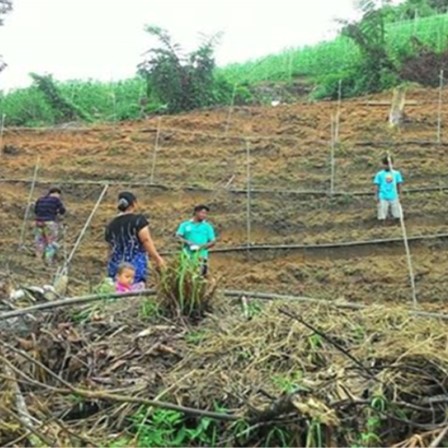
Photo above: Orang Asli families working together to build food sovereignty through community-led farming on ancestral land. Photo provided by the author. |
|
|
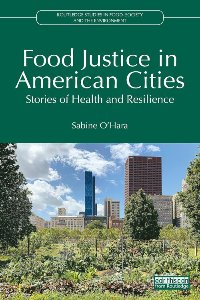
From the review:
Throughout the seven chapters, O’Hara draws on case studies in five cities—Chicago, Albuquerque, Atlanta, Oakland, and the Brooklyn borough of New York City—to describe how food insecurity affects the lives of urban residents and how the structural inequities that underlie food insecurity relate to history, policy, and place. . . . O’Hara’s book is rooted in a systems-thinking perspective and emphasizes how individual experiences of food insecurity are connected to broader social, economic, and policy structures. This systemic framing reminds us that food insecurity is what Rittel and Webber (1973) famously called a “wicked problem,” a challenge so complex and intertwined with other societal issues that it defies straightforward solutions. Yet, O’Hara approaches this complexity with pragmatism and hope."
Read the entire book review for free at JAFSCD: https://doi.org/10.5304/jafscd.2025.151.031 |
|
|
|
As a community-supported journal, JAFSCD depends on our community of shareholders, who contribute to keep our content free and freely accessible, worldwide. We appreciate all our new and renewing shareholders! Learn more about joining here.
Our newest JAFSCD Shareholders are: |
|
|
SUPPORT JAFSCD THROUGH YOUR LIBRARY! |
|
|
|
If you are affiliated with a college or university and want to support JAFSCD, now is the time of year when libraries order new journal subscriptions. |
|
|
How do I know if my library already contributes? Check the list here (scroll down on the page).
Isn't JAFSCD open access and free? It is! But we are a community-supported journal. Libraries contribute to become JAFSCD Library Shareholders instead of buying a subscription — keeping JAFSCD free to all instead of buying access just for their faculty and students. Think of us as the CSA of journals!
Considering submitting a manuscript to JAFSCD? If your institution is a JAFSCD Shareholder, you benefit by having our US$750 APC waived automatically.
How do I recommend JAFSCD to my library? Tell your librarian why JAFSCD is important to your work, and send them this link to learn more!
Contact Amy Christian, managing editor, for details or assistance. |
|
|
This email is sent to you as a notification of the newest JAFSCD articles and other occasional JAFSCD news. |
|
JAFSCD is an open access, community-supported journal! Your library, program, or organization can become a shareholder to help keep JAFSCD's content available to all, regardless of their resources. We welcome anyone to become an individual shareholder; donations are tax-deductible to the extent allowed by law.
|
|
|
|