from the Journal of Agriculture, Food Systems, and Community Development |
|
|
JAFSCD is the world’s only community-supported journal. JAFSCD content is open access (free) thanks to the generous support of our shareholders: the JAFSCD Shareholder Consortium, Library Shareholders, a growing number of Individual Shareholders, and our JAFSCD Partners: |
|
|
JAFSCD peer-reviewed article by Svetla Stoeva (Institute of Philosophy and Sociology at the Bulgarian Academy of Sciences)
Urban agriculture is increasingly recognized as a cornerstone of sustainable cities, offering ways to tackle food insecurity, environmental degradation, and social inequality. Yet, many initiatives struggle with the same fundamental problem: while collaboration is necessary, not all stakeholders have an equal voice at the table.
In a new JAFSCD article, Collaborative governance in urban agriculture: Stakeholder roles, collaborative mechanisms, and power dynamics, Svetla Stoeva (Institute of Philosophy and Sociology at the Bulgarian Academy of Sciences) explores how collaboration between public authorities, NGOs, businesses, and community practitioners shapes the success of urban farming initiatives across Europe.
Drawing on 14 case studies, the article shows that effective governance depends not only on resources and regulations but also on how well stakeholders share responsibilities, build trust, and adapt to challenges. Author Svetla Stoeva can be contacted at svetla.stoeva@gmail.com.
KEY FINDINGS -
Diverse stakeholder roles: Public authorities provide regulation and land; NGOs and CSOs mobilize communities; businesses bring innovation and funding; practitioners supply local knowledge and labor.
-
Collaborative mechanisms matter: Successful initiatives rely on participatory decision-making, resource-sharing, and continuous feedback.
- Power imbalances persist: Public authorities and businesses often dominate, while grassroots voices are marginalized, risking inclusivity and equity.
-
Context shapes collaboration: Different types of initiatives (social farms, urban farms, DIY gardens, community parks, community gardens, zero-acreage farms) each require a tailored governance approach.
RECOMMENDATIONS FOR POLICY, PRACTICE, AND RESEARCH Design governance structures that ensure all voices—not only institutional ones—are heard. Support mechanisms for balancing power, such as inclusive forums and participatory planning. Adapt regulations to enable innovative practices like rooftop or vertical farming.
Encourage further research, especially beyond Europe, to understand governance in diverse urban contexts.
SHARE ON YOUR SOCIALS
How do we make urban farming fair and sustainable? New research shows that real collaboration—not just formal partnerships—is the key to resilient urban food systems. Read the full @JAFSCD article for free: https://doi.org/10.5304/jafscd.2025.151.014 #urbanag #governance #localfood |
|
|
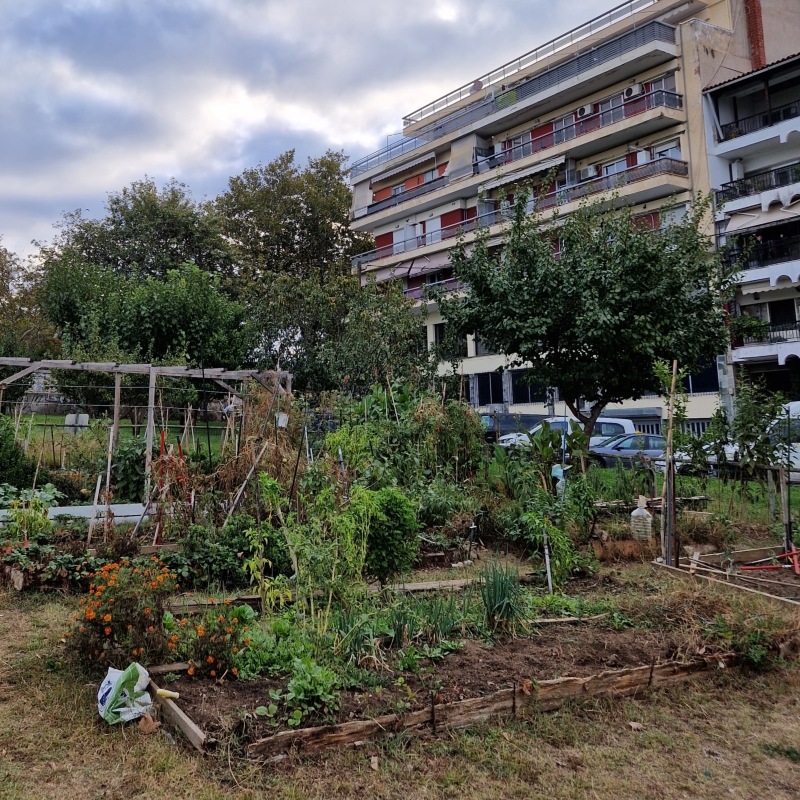
Photo above: An urban community garden in Thessaloniki, Greece—established on municipal land with initial funding from a nongovernmental organization—shows how collaboration between citizens, municipalities, and NGOs can foster sustainable and inclusive food systems. Photo by Svetla Stoeva. |
|
|
| Could Mentoring help people in your organization? Whether at a small local food organization or a large land-grant university, people everywhere benefit from mentoring. Brian Raison, a professor and Extension educator with the Ohio State University, has compiled 40 easy-to-use mentoring tools to help build capacity in people and organizations. This mentoring approach is grounded in nonformal learning theory that meets people where they are and provides highly engaging tools (“conversation-starters”) that mentors can use with no training. All are available as free downloads (or hard copies at moderate cost).
|
|
|
SUPPORT JAFSCD THROUGH YOUR LIBRARY! |
|
|
| If you are affiliated with a college or university and want to support JAFSCD, now is the time of year when libraries order new journal subscriptions. |
|
|
How do I know if my library already contributes? Check the list here (scroll down on the page).
Isn't JAFSCD open access and free? It is! But we are a community-supported journal. Libraries contribute to become JAFSCD Library Shareholders instead of buying a subscription — keeping JAFSCD free to all instead of buying access just for their faculty and students. Think of us as the CSA of journals!
Considering submitting a manuscript to JAFSCD? If your institution is a JAFSCD Shareholder, you benefit by having our US$750 APC waived automatically.
How do I recommend JAFSCD to my library? Tell your librarian why JAFSCD is important to your work, and send them this link to learn more!
Contact Amy Christian, managing editor, for details or assistance. |
|
|
This email is sent to you as a notification of the newest JAFSCD articles and other occasional JAFSCD news. |
|
JAFSCD is an open access, community-supported journal! Your library, program, or organization can become a shareholder to help keep JAFSCD's content available to all, regardless of their resources. We welcome anyone to become an individual shareholder; donations are tax-deductible to the extent allowed by law.
|
|
|
|