from the Journal of Agriculture, Food Systems, and Community Development |
|
|
JAFSCD is the world’s only community-supported journal. JAFSCD content is open access (free) thanks to the generous support of our shareholders: the JAFSCD Shareholder Consortium, Library Shareholders, a growing number of Individual Shareholders, and our six JAFSCD Partners: |
|
|
In a new JAFSCD program brief, an introduction to and overview of the Common Ground Canada Network (CGCN) is presented by its director, Karen Foster. CGCN is a national partnership of social science and humanities (SSH) researchers, community organizations, Indigenous leaders, farmers, policymakers, and civil society groups working together to transform Canada’s agriculture and food systems for a sustainable, net-zero future.
CGCN recognizes that climate change is not just a technical problem requiring the expertise of natural scientists and engineering; it is also a problem of relationships between people and the land, between rural and urban communities, between Canada and the world, and between people within/and food systems. The full program brief is entitled Common Ground Canada Network: Building relationships for just and sustainable agriculture and food systems transitions.
Funded by a joint opportunity from the Social Sciences and Humanities Research Council (SSHRC) and Agriculture and Agrifood Canada (AAFC), CGCN has grown to approximately 200 researchers from over 20 universities, and connected to over 70 community networks, 122 academic networks, and 60 community organizations. In addition, upon receiving funding, CGCN partnered with the Food Communities Network, a coast-to-coast-to-coast network of over 400 community actors who are actively working to improve food systems. In this overview, Dr. Foster explains the network’s origins, assumptions, activities to date and plans for the future.
SHARE ON YOUR SOCIALS
Common Ground Canada Network (CGCN) links together academics, farmers, policymakers, community organizations, and First Nations communities to transform Canada’s agriculture and food systems toward a sustainable, net-zero future. Read the @JAFSCD program brief for free: https://doi.org/10.5304/jafscd.2025.151.004
#foodsystems #netzero #canada #socialscience #humanities |
|
|
Image above: The logo of Common Ground Canada Network (CGCN). |
|
|
JAFSCD SHAREHOLDER WEBINAR |
|
|
Join Dalhousie University and CIHEAM Montpellier for Growing Agency, the 6th webinar in the Sustainable Diets series, on Thurs., November 20, 9-10am EST. Learn about food sovereignty movements around the world and discuss strategies for communities to reclaim power over food systems.
Register for free HERE |
|
|
JAFSCD PARTNER & SHAREHOLDER NEWS |
|
|
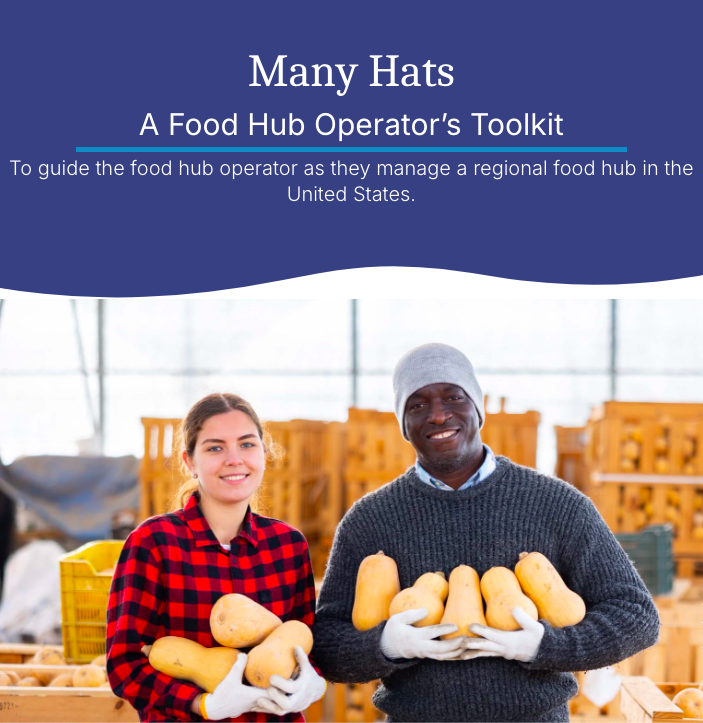
Teams at the University of Vermont (a JAFSCD Partner) and Michigan State University (a JAFSCD Shareholder) partnered with the USDA Agricultural Marketing Service on a project to expand knowledge about food hubs, especially the roles of food hub operators and the progression of their work from start-up to established operations.
The hats these operators wear are invaluable to the ecosystem of local and regional food systems. The project's stories and resources can help motivate, reinforce, and inspire operators and other local purchasing players. Check out Many Hats: A Food Hub Operator’s Toolkit and The Food Hub Podcast.
|
|
|
SUPPORT JAFSCD THROUGH YOUR LIBRARY! | |
|
|
If you are affiliated with a college or university and want to support JAFSCD, now is the time of year when libraries order new journal subscriptions. |
|
|
How do I know if my library already contributes? Check the list here (scroll down on the page).
Isn't JAFSCD open access and free? It is! But we are a community-supported journal. Libraries contribute to become JAFSCD Library Shareholders instead of buying a subscription — keeping JAFSCD free to all instead of buying access just for their faculty and students. Think of us as the CSA of journals!
Considering submitting a manuscript to JAFSCD? If your institution is a JAFSCD Shareholder, you benefit by having our US$750 APC waived automatically.
How do I recommend JAFSCD to my library? Tell your librarian why JAFSCD is important to your work, and send them this link to learn more!
Contact Amy Christian, managing editor, for details or assistance. |
|
|
This email is sent to you as a notification of the newest JAFSCD articles and other occasional JAFSCD news. |
|
JAFSCD is an open access, community-supported journal! Your library, program, or organization can become a shareholder to help keep JAFSCD's content available to all, regardless of their resources. We welcome anyone to become an individual shareholder; donations are tax-deductible to the extent allowed by law.
|
|
|
|