from the Journal of Agriculture, Food Systems, and Community Development |
|
|
JAFSCD is the world’s only community-supported journal. JAFSCD content is open access (free) thanks to the generous support of our shareholders: the JAFSCD Shareholder Consortium, Library Shareholders, a growing number of Individual Shareholders, and our six JAFSCD Partners: |
|
|
The 2019 Canadian Food Guide was launched with a promise to be inclusive of multicultural diets and diverse perspectives on food, including the food systems of Indigenous communities. But some scholars argue that federally designed standard food guides often fail to address the myriad and complex issues of food security, well-being, and nutritional needs of Canadian Indigenous communities while imposing a dominant and westernized worldview of food and nutrition. In a parallel development, Indigenous food systems and associated knowledges and perspectives are being rediscovered as a hope and ways to improve current and future food security.
Based on a review of relevant literature and their long-term collaborative learning and community-based research engagements with Indigenous communities in Manitoba, the authors propose that when developing their food guides, Indigenous communities should consider their contexts, needs, and preferences. In this JAFSCD From the Vault article, Pathways to revitalization of Indigenous food systems: Decolonizing diets through Indigenous-focused food guides, the authors discuss the scope and limitations of the most recent Canadian food guide and opportunities to decolonize it through Indigenous food guides, including their potential benefits in enhancing food security and well-being for Indigenous communities.
The Canada Food Guide is a one-size-fits-all model, designed to provide recommendations for healthy eating and food choices for all Canadians, with the user to interpret the recommendations to the best of their ability. This one-size-fits-all model, however, does not represent the incredibly diverse population in Canada and does not tackle essential barriers to accessing healthy food, which leads to the marginalization of diets and food practices. The Eurocentric ideals around healthy eating are often positioned in a scientific or unbiased way to “shield the document from outside influences deemed non-scientific,” such as cultural food preferences.
RECOMMENDATIONS FOR POLICY, PRACTICE, AND RESEARCH
Contemporary nutritional sciences are beginning to acknowledge the importance of Indigenous food practices as a key to health, well-being, and Indigenous cultural revitalization and resurgence. There is also an emerging opportunity and need to learn from the underlying Indigenous food knowledges and perspectives that give rise to Indigenous food systems and associated knowledges. An Indigenous food guide specific to each diverse Indigenous group is a way for these communities to be empowered, work on community development, be self-sustaining, and improve their knowledge of nutrition in relation to their cultural food systems. It is a way for these communities to address accessibility and affordability in ways that are self-determining, creative, and relevant to their contexts.
SHARE ON YOUR SOCIALS
In our highlighted JAFSCD From the Vault article, "Pathways to the revitalization of Indigenous food systems: Decolonizing diets through Indigenous-focused food guides," authors Taylor Wilson and Shailesh Shukla state, "In Indigenous cultures, food systems go hand in hand with health and healing, and it is about time that these knowledge systems be nurtured because of their potential to have positive effects on Indigenous health, well-being, and food security. We argue that weaving local and Indigenous food systems and associated knowledges and perspectives in the development of a food guide can have many positive effects at local, national, and international scales for protecting food environments, restoring Indigenous foodways and cultures, improving food security and accessibility, and promoting local economies through community-based social enterprises." Read the full @JAFSCD commentary for free: https://doi.org/10.5304/jafscd.2020.094.003
#CommunityBasedResearch #Decolonization #Indigenous #IndigenousKnowledgeSystems |
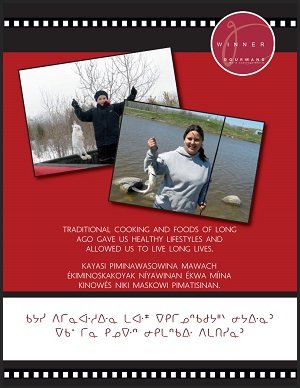
Image above: Figure 2 from the article: Fisher River Cree and English cookbook, Traditional Cooking and Foods of Long Ago Gave Us Healthy Lifestyles and Helped Us to Live Long Lives, published by Fisher River Cree Nation & University of Winnipeg, 2019. |
|
|
USDA National Agricultural Library Transdisciplinary Approaches webinar series
Tribal Research Partnerships:
Indigenous Agroforestry, Food Security and Sovereignty Wed., May 29, 2:00-3:30 pm ET
Join the USDA for a webinar series highlighting opportunities and challenges of transdisciplinary approaches in Tribal agroforestry and food security research. This webinar is part of the Transdisciplinary Approaches webinar series. (Recordings of previous webinars are here.)
The panel reflects a diversity of Tribal, academic, nongovernmental organization, and USDA transdisciplinary research approaches, and will discuss how and in what ways this research is serving tribal communities and how to overcome challenges. Panelists will share information about what processes foster success among research partnership teams and highlight the role of partners in large-scale projects. To register for the webinar Tribal Research Partnerships: Indigenous Agroforestry, Food Security and Sovereignty, go here.
Moderator/co-organizer: Frank K. Lake, USDA Forest Service Panelists: -
Jennifer Sowerwine, Associate Professor of Cooperative Extension, Department of Environmental Science, Policy & Management, University of California, Berkeley
-
Vikki Preston, Cultural Resources Tech lll, Karuk Tribe Department of Natural Resources
-
Heather Rickard, Plants Program Coordinator, Karuk Tribe Department of Natural Resources
-
Kathy McCovey, Karuk Cultural Practitioner and NIFA AFRI and other food-security project mentor and research partner
-
Stephanie Gutierrez, Forest and Community Program Director, EcoTrust. Current principal investigator for a USDA NIFA-funded and -supported PNW Tribal Agroforestry project
|
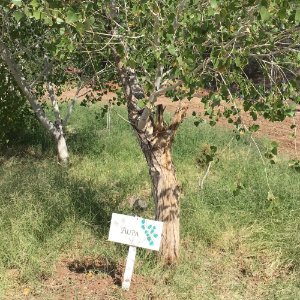
Photo above: The aupa (Fremont cottonwood) benefits Indigenous communities in a variety of ways (being used for shelter, medicine, and more). This aupa is at the community garden at the Salt River Pima-Maricopa Indian Community in Arizona. Photo taken in 2017 by Amy Christian.
|
|
|
This email is sent to you as a notification of the newest JAFSCD articles and other occasional JAFSCD news. |
|
JAFSCD is an open access, community-supported journal! Your library, program, or organization can become a shareholder to help keep JAFSCD's content available to all, regardless of their resources. We welcome anyone to become an individual shareholder; donations are tax-deductible to the extent allowed by law.
| |
| |